
As of 2026, many shippers are now searching for ways to calculate, track, and report their Scope 3 logistics emissions in order to comply with regulations like EU ETS and CSRD.
This presents an immense challenge: accurately tracking, analyzing, and reducing CO₂ emissions across a complex, multi-carrier global supply chain is nearly impossible with outdated manual methods. Spreadsheets and static reports are not just inefficient; they are prone to error and fail to provide the actionable intelligence needed to make meaningful changes.
This guide will serve as your definitive resource on the best ocean freight emissions software and CO₂ tracking, reporting, and compliance tools available today. We will explain what to look for in a platform to gain the visibility and control needed to turn the burden of sustainability into a powerful strategic advantage.
How Shippers Calculate and Report Ocean Freight Emissions (EU ETS & CSRD)
To calculate ocean freight emissions, shippers use software aligned with the GLEC Framework and ISO 14083 standards. These platforms automatically collect shipment data (route, carrier, vessel, distance) and convert it into CO₂ emissions. This data is then used for compliance reporting under regulations like EU ETS and CSRD, which require auditable Scope 3 emissions tracking.
Why Accurate CO₂ Tracking Is No Longer Optional for Shippers
Adopting dedicated emissions tracking software is no longer a choice—it’s a strategic necessity. The business case for proactive emissions management is now directly linked to regulatory compliance, financial performance, and your brand’s reputation. Failing to act carries significant risks, while managing emissions effectively creates clear opportunities.
Navigating the New Regulatory Landscape
A suite of new regulations now requires shippers to produce precise, auditable emissions data. Attempting to manage this compliance burden without specialized software is a direct risk to your operations and budget.
- IMO Regulations (CII): The International Maritime Organization’s Carbon Intensity Indicator (CII) rates individual vessels on their carbon efficiency. This rating directly impacts a vessel’s commercial viability, making granular emissions data crucial for selecting carriers and avoiding partnerships with underperforming, higher-risk assets [1].
- Corporate Sustainability Reporting Directive (CSRD): This European directive mandates that thousands of companies provide detailed, audited reports on their Scope 3 emissions, which explicitly includes all transportation and logistics activities. Without a verifiable data trail from your entire supply chain, compliance is impossible [2].
- EU Emissions Trading System (ETS): The inclusion of maritime transport in the EU ETS creates a direct financial cost for carbon emissions. Shippers are now seeing these costs passed on through carrier surcharges, turning pollution into a direct business cost and making reduction a clear path to savings [3].
The Business Case for Proactive Emissions Management
Beyond staying compliant, effective emissions management unlocks tangible business opportunities that strengthen your bottom line and competitive position.
- Achieve Significant Cost Savings: Lower emissions directly correlate with greater fuel efficiency, optimized routes, and reduced exposure to carbon taxes and ETS surcharges. A powerful platform helps you identify and act on these cost-saving opportunities before a single container is booked.
- Enhance Brand Reputation and Value: A demonstrable, data-backed commitment to sustainability is a powerful differentiator that attracts environmentally conscious customers, top-tier talent, and ESG-focused investors who view responsible operations as a sign of long-term strength.
- Future-Proof Your Supply Chain: Proactively managing your carbon footprint is a strategic move to build a more resilient and efficient maritime supply chain. It prepares your organization for future market shifts and the certainty of even stricter environmental regulations.
Key Features of the Best Shipping CO₂ Emissions Calculators
When evaluating solutions, it is critical to look beyond simple calculators and focus on platforms that provide comprehensive, actionable intelligence. The best Shipping CO2 Emissions Calculator is not a standalone tool; it is an integrated system woven into your operational fabric. Here are the non-negotiable features for 2026.
Modern platforms do not just calculate emissions—they allow shippers to track emissions in real time, generate automated reports, and ensure compliance with Scope 3 requirements under CSRD and EU ETS.
Accredited Methodology (GLEC Framework & ISO 14083)
The credibility of your emissions data is essential. Any software you consider must use a methodology accredited by the GLEC Framework and fully aligned with the new ISO 14083 standard. This is the global benchmark for measuring and reporting greenhouse gas emissions from transport chains, ensuring your data is accurate, comparable, and—most importantly—audit-proof for regulatory disclosures like CSRD [4].
Real-Time, Voyage-Level Data Accuracy
Many basic tools rely on static, outdated industry averages, which can lead to significant inaccuracies. Superior platforms leverage real-time, voyage-level data, using inputs like AIS (Automatic Identification System) tracking to factor in a vessel’s actual route, speed, and engine data [5]. This level of accuracy is essential for making meaningful operational decisions, not just generating high-level estimates.
Multimodal Route & Carrier Optimization
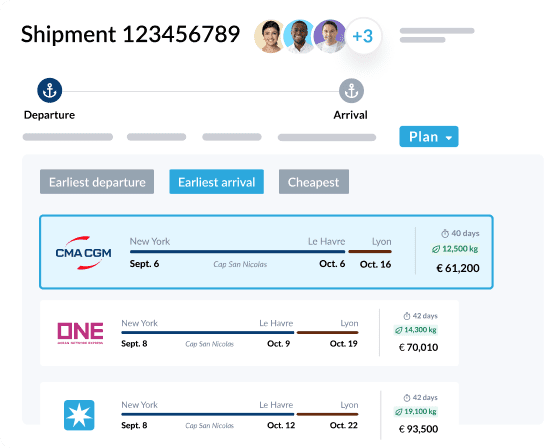
Ocean freight is rarely the entire journey. A top-tier tool must offer multimodal analysis to measure and optimize the complete door-to-door carbon footprint. The best software to reduce shipping CO2 emissions empowers you to simulate and compare the carbon impact of different routes, modes (sea, rail, barge), and specific carriers before you book. This transforms you from a reactive reporter to a proactive decision-maker, allowing you to balance cost, transit time, and environmental performance [6].
Advanced Reporting & Analytics Dashboards
Data is only valuable if it drives action. The software you choose must provide intuitive, customizable dashboards that allow you to track emissions KPIs, benchmark carrier performance, and pinpoint high-emission “hotspots” in your network. Crucially, it must automate the generation of compliance-ready reports. Platforms like BuyCo allow you to maximize performance with reporting and analytics by centralizing all shipping data into a single, actionable control center.
Ocean Freight Visibility Platforms with CO₂ Tracking
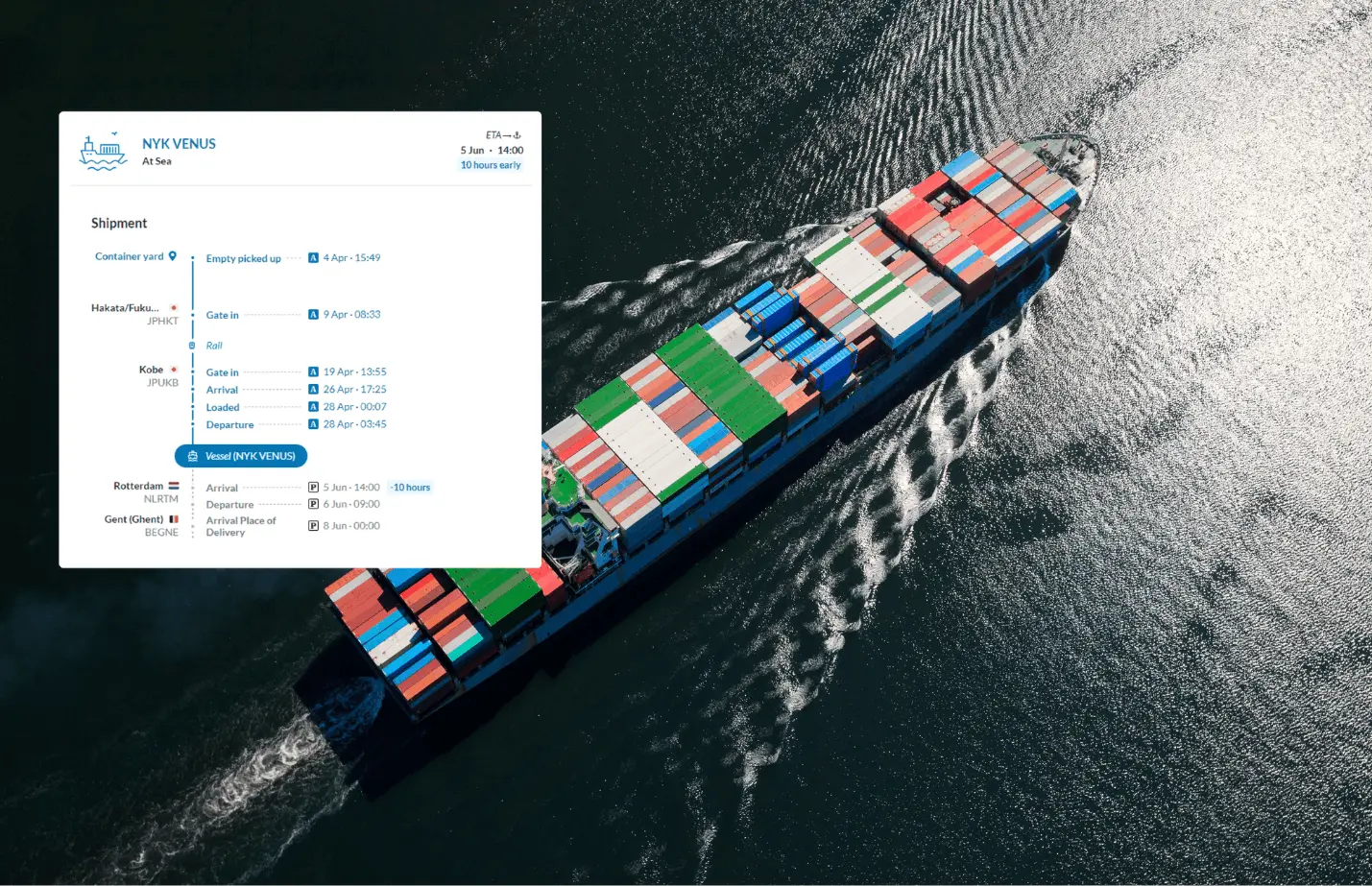
The most advanced platforms combine real-time container visibility with emissions tracking. This allows shippers to monitor both shipment status and carbon footprint in a single system, improving operational decision-making and enabling proactive emissions reduction.
How the BuyCo Platform Delivers Unmatched Visibility and Control
The BuyCo Platform is engineered for large-volume shippers to manage their entire container shipping lifecycle in one unified place, seamlessly integrating emissions management into daily operations. It’s the comprehensive solution that empowers you to measure, reduce, and report your carbon footprint without adding complexity.
Measure: GLEC-Accredited Calculations You Can Trust
The Problem: Shippers need reliable, audit-proof emissions data but are buried under the administrative burden of manual collection from dozens of different sources.
The BuyCo Solution: As part of our leadership in the CO₂NTROL Project, the BuyCo platform automates the calculation of GLEC-accredited and ISO 14083-aligned CO₂ data for every single shipment. This creates a centralized, single source of truth for all emissions, guaranteeing accuracy for reporting while saving your team hundreds of administrative hours.
Reduce: AI-Powered Optimization Before You Ship
The Problem: Simply knowing your emissions number isn’t enough; you need powerful, accessible tools to lower it and control the associated costs.
The BuyCo Solution: The platform’s AI-powered capabilities allow you to move from passive measurement to active reduction. BuyCo enables you to:
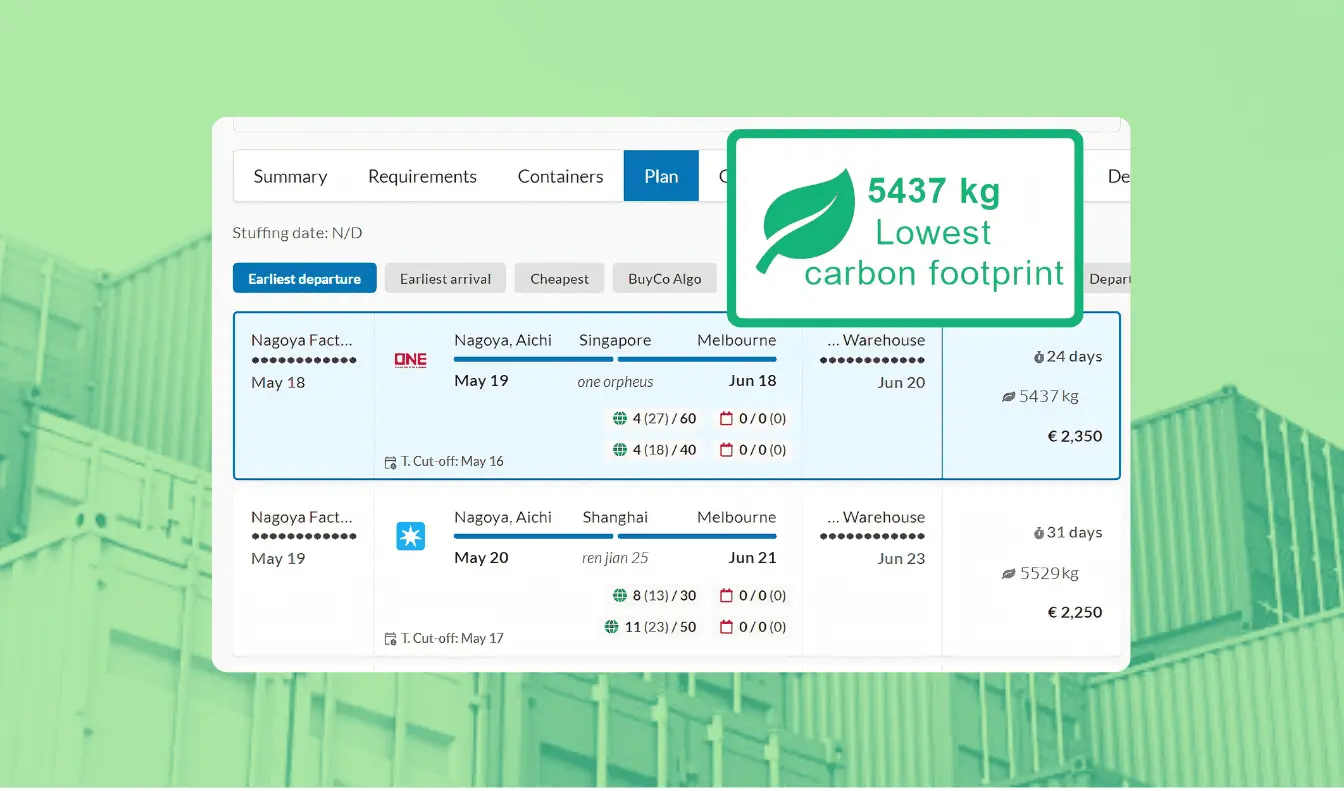
- Simulate and compare the carbon footprint of different multimodal routes.
- Select carriers and vessels based on their real-world environmental performance ratings.
- Optimize container utilization to lower your per-unit carbon footprint.
These tools empower you to proactively reduce your container freight emissions at the planning stage, where your decisions have the greatest impact.
Report: Centralized Data for Seamless Compliance
The Problem: Compiling emissions data from scattered carrier portals and forwarder spreadsheets for sustainability reports is a recurring logistical nightmare prone to error and delay.
The BuyCo Solution: The BuyCo Platform acts as the central control tower for all your shipping operations and data. It provides a unified dashboard to monitor emissions in real-time, generate automated performance analytics, and export compliance-ready reports for CSRD and other ESG disclosures with a few clicks. This gives you absolute visibility and control over your supply chain.
Comparing the Best Platforms to Measure Ocean Freight Emissions
The market for emissions tracking is expanding, but not all solutions offer the same value. To find the best platform to measure ocean freight emissions, shippers must understand the critical difference between pure data providers, specialized analytics tools, and truly integrated operational platforms.
BuyCo
Focus: Integrated Container Shipping Platform for Shippers
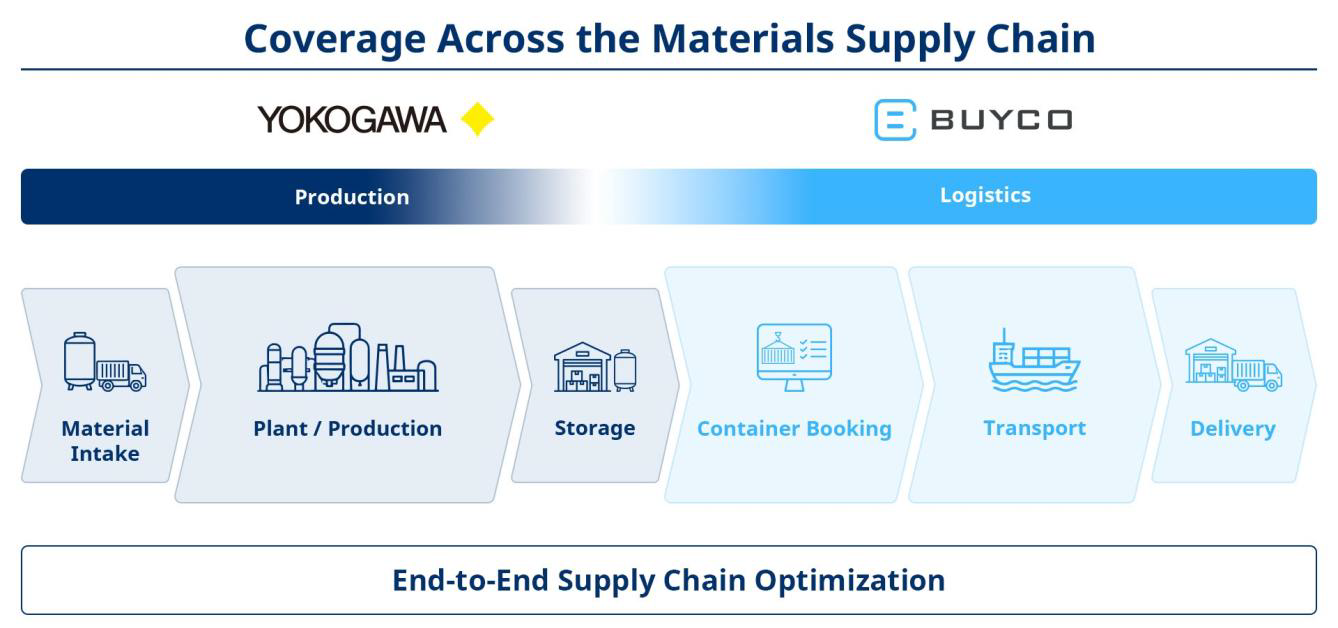
BuyCo is more than just a calculator; it is a complete container shipping solution that embeds emissions management directly into your end-to-end operational workflow. From planning and booking to tracking and analytics, the platform connects data to action in one unified system. This unique integration allows you to streamline processes and make smarter, more sustainable decisions in real time. It is designed for shippers who want to manage their entire shipping lifecycle, not just calculate emissions in isolation.
Searoutes
Focus: CO₂ Emissions Data & API Specialist
Searoutes provides the powerful data engine and API connections that fuel many best-in-class emissions calculators, including BuyCo’s [7]. While it offers world-class data, Searoutes is primarily a technology provider for other platforms. For a shipper, using a data provider directly means you get accurate numbers, but you are still responsible for building the operational tools and workflows needed to turn that data into action.
Shipzero / OceanScore
Focus: Logistics Emissions Intelligence Platforms
Tools like Shipzero [8] and OceanScore [9] are strong, specialized platforms for emissions data analysis and reporting. They provide deep intelligence for benchmarking and strategic planning. However, these platforms often operate separately from the execution layer where booking and management happen. This can create a disconnect between insight and action, forcing teams to work across multiple systems.
FAQ
How do you calculate CO₂ emissions for ocean freight?
Ocean freight CO₂ emissions are calculated using standardized methodologies such as the GLEC Framework and ISO 14083. Emissions are based on shipment-specific data including distance traveled, vessel type, fuel consumption, cargo weight, and transport mode. Advanced software platforms automate this process by collecting real-time voyage and carrier data, ensuring accurate and audit-ready emissions calculations for Scope 3 reporting and regulatory compliance.
What is the best shipping CO₂ emissions calculator?
The best shipping CO₂ emissions calculator is one that combines accuracy, compliance, and operational integration. Platforms like BuyCo provide GLEC-accredited calculations directly within a container shipping workflow, while solutions like Searoutes offer high-quality emissions data and APIs. For shippers, the most effective tools are those that not only calculate emissions but also connect that data to booking, tracking, and decision-making processes.
How can shippers reduce ocean freight emissions?
Shippers can reduce ocean freight emissions by optimizing routes, selecting more efficient carriers and vessels, and improving container utilization. Software platforms enable this by allowing teams to compare different transport scenarios before booking, balancing cost, transit time, and carbon impact. Additional strategies include shifting to lower-emission transport modes where possible and consolidating shipments to reduce empty space and unnecessary movements.
Do I need software for EU ETS shipping compliance?
Yes, software is essential for EU ETS shipping compliance. The regulation requires accurate, auditable emissions data across your transport activities, which cannot be reliably managed with manual processes or spreadsheets. Dedicated platforms automate data collection, calculate emissions in line with recognized standards, and generate compliance-ready reports. This ensures that shippers can meet regulatory requirements while also managing the financial impact of carbon-related costs.
Conclusion
In 2026, effective emissions management is a non-negotiable part of a modern, resilient, and profitable supply chain. The challenge of navigating complex regulations and stakeholder demands can be transformed into a powerful business opportunity with the right technology. A truly superior solution is one that integrates measurement, reduction, and reporting directly into your daily shipping operations, making sustainability a natural outcome of efficiency.
The BuyCo Platform stands out as the definitive tool providing the automation, visibility, and control necessary to master sustainable shipping. It moves beyond simple calculation to empower your team to make smarter, greener decisions across the entire container lifecycle.
Ready to gain complete visibility and control over your ocean freight emissions? See how the BuyCo Platform helps you streamline processes, reduce your carbon footprint, and drive real business growth.