
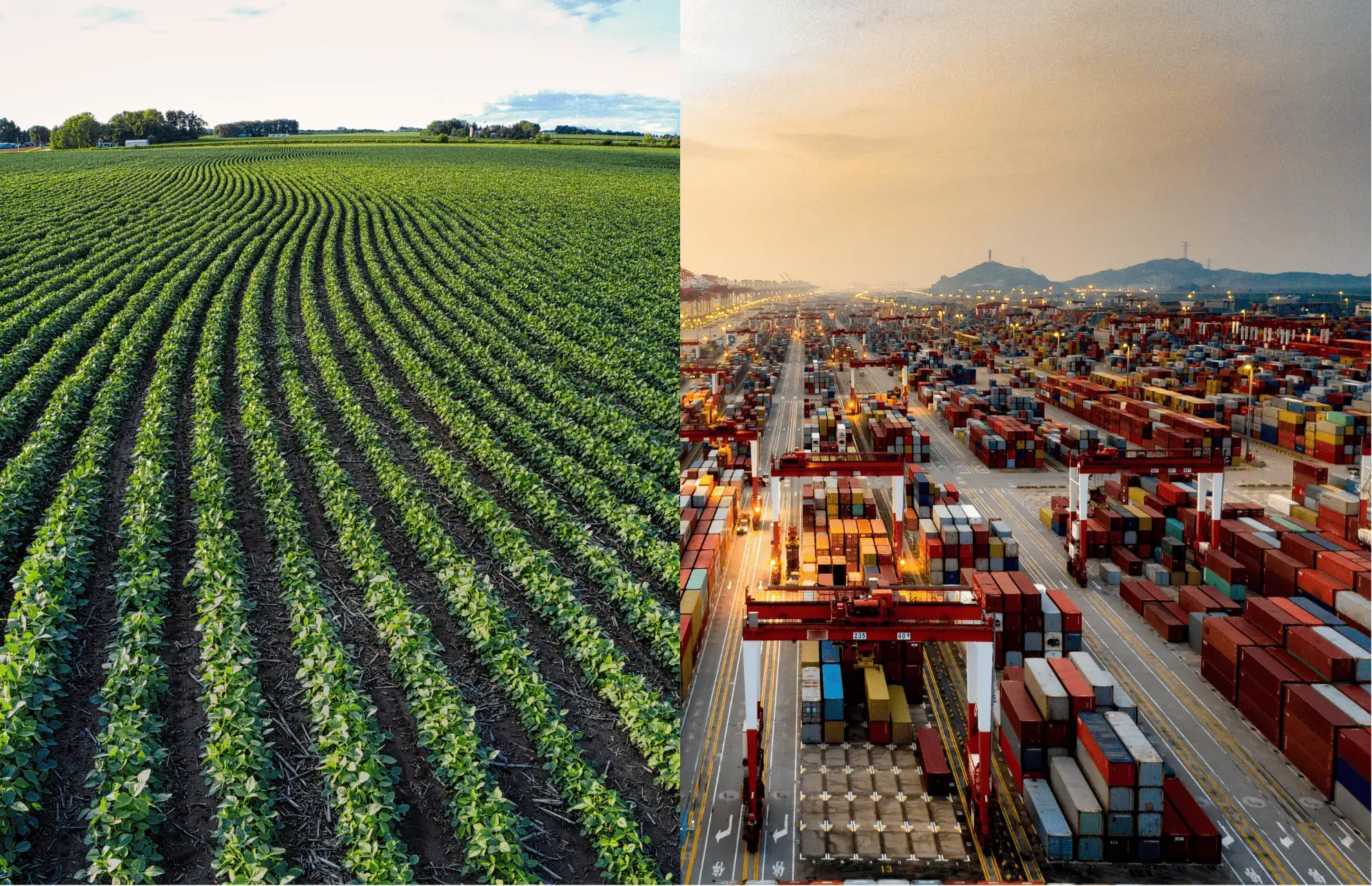
Cotton, hay, potatoes, walnuts, frozen products, reefers, fresh produce. Agricultural exporters move all of it by ocean freight, out of the US, Brazil, Europe, and Asia alike. Most keep that shipping operation in-house to protect margins that are already thin, but the model doesn’t scale easily: it runs on direct carrier relationships with no digital connection to back them up, labor-intensive booking and documentation, constant disruptions and moving cutoffs, and limited visibility across every partner involved. Here’s where that strain actually shows up, and how a single platform like BuyCo is being used by agricultural exporters to close the gap.
Protecting Margins, Straining Operations
Why exporters hold onto shipping in the first place
For most agricultural exporters, keeping ocean freight in-house isn’t an oversight, it’s a deliberate choice. Margins in this business are already thin, and freight is one of the largest costs sitting on top of them. Outsourcing that function to a third party means giving up direct control over relationships, rates, and timing at exactly the point where a few dollars per container can matter. So exporters keep the function close, manage their own carrier relationships, and run their own booking and documentation operations internally.
Why that choice gets harder to sustain as volume grows
The problem is that this in-house model wasn’t built to scale. It depends on labor-intensive manual work for booking and documentation, on absorbing constant disruptions and moving cutoffs without much warning, on maintaining direct collaboration with shipping lines that isn’t backed by a shared digital system, and on operating with limited visibility and limited ability to collaborate with the wide network of partners a single shipment touches. None of that gets easier as an exporter grows. If anything, it multiplies: more shipments means more portals to check, more documents to file, and more partners to keep updated, all through the same manual processes that worked at a smaller scale. The rest of this article looks at exactly where that strain shows up, and how it can be addressed without asking exporters to give up the control they’ve built their operations around.
Close to the Carrier, Far from the Data
A strong relationship, a weak data connection
Agricultural exporters usually have something most shippers would envy: direct, longstanding relationships with shipping lines, often backed by direct contracts. But that closeness rarely comes with a matching digital connection. The relationship is strong; the data flow behind it isn’t. So even though the booking, operations, and documentation work should, in theory, be simplified by having a direct line to the carrier, it stays labor-intensive in practice.
Where the manual work actually lives
That gap gets filled with manual work. Before adopting any kind of digital solution, exporters typically end up juggling multiple carrier e-commerce portals, separate tracking pages, and various spreadsheets just to keep tabs on their own shipments. Information scatters across forwarder emails, carrier portals, and terminal portals, and blind spots creep into the supply chain as a result.
“This isn’t a small-shipper problem, either. Larger exporters moving higher container volumes don’t necessarily have better tooling; they often just repeat the same portal-hopping process at greater scale. And a lot of that manual load comes down to re-keying: taking booking information from one system, say a carrier portal, and typing it again into an internal ERP or SAP system.” explains Avishek Halder, Enterprise Account Manager for North and South America at BuyCo. “It’s tedious, it requires real oversight to catch errors, and it eats into time that could go toward actually planning and executing shipments.”
Shipping Something That Can’t Wait
Living with constant schedule changes
Layer unpredictability on top of that fragmentation, and the stakes go up. Disruptions and moving cutoffs are a constant in this industry, especially in the US, where exporters report not being told when an Estimated Time of Departure changes, even after their containers are already moving, or when Earliest Receiving Dates get updated. In large countries like the US or Brazil, where agricultural products often originate deep inland and move by rail toward the coast, the complexity compounds: rail schedule changes and ERD or Latest Receiving Date changes can hit at both the rail terminal and the port, sometimes independently of each other. Container rolls, whether initiated by the carrier, the exporter, or the rail operator, round out the two most common problems these exporters deal with, alongside schedule changes themselves.
Why perishability raises the pressure
None of this would be as costly if the cargo could simply wait it out. Much of it can’t. Grain, hay, frozen goods, and chilled products are either immediately perishable or close to it, which makes internal processing time non-negotiable. Any inefficiency in booking or documentation directly raises the risk that goods spoil before they arrive. And because agricultural exporters tend to ship seasonally, this pressure doesn’t arrive evenly. It spikes hard during certain windows of the year, exactly when planning and scheduling need to be at their sharpest.
A Shipment Is Never Just One Company’s Problem
Keeping a wide circle of partners aligned
A single agricultural export shipment usually involves a wide circle of people who all need to stay aligned: documentation teams, drayage teams, consignees at destination, customs brokers, freight forwarders, and traders who may have already sold the product to a buyer and are representing that buyer’s interest. Keeping everyone updated without relying on a constant back-and-forth of emails becomes harder as that circle grows.
The paperwork behind every shipment
Documentation adds its own layer of friction here. Once cargo is moving, exporters are generating and filing shipping instructions, VGM submissions, export filings, phytosanitary certificates, commercial invoices, packing lists, and weight certificates, often with different requirements depending on destination and product. Keeping all of that cleanly organized, rather than scattered across systems and inboxes, is one of the more distinctly agricultural challenges in this business. And every disruption already mentioned, a schedule change, a roll, a delay, eventually shows up as a cost: free time gets used up, liability for detention or demurrage charges becomes unclear, and monitoring that exposure closely enough to control it is its own ongoing task.
Where a Single Window Actually Helps
Centralizing the planning layer
Chad Jones, Solution Engineer at BuyCo explains: ‘The common thread through all of this is fragmentation. Agricultural exporters aren’t lacking carrier relationships, product knowledge, or shipping expertise; they’re managing bookings, tracking, documentation, and partner coordination across too many disconnected systems. This is the specific problem BuyCo’s platform is built to close, and it’s reflected in how BuyCo’s agricultural exporter customers actually use it today.’
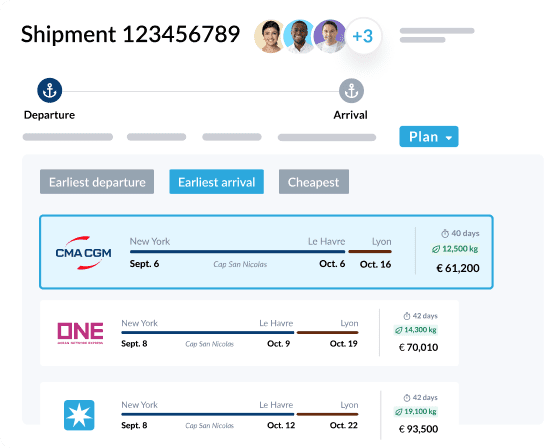
It starts with centralizing the planning layer. Rather than checking each carrier’s website individually, exporters using BuyCo have their negotiated rates and allocation information housed in one place, with live sailing schedules pulled in directly through BuyCo’s carrier integrations. While BuyCo currently covers comprehensive cutoff and ERD information for all US and Canadian ports, the platform is also actively working with global clients to continuously improve and expand these precise cargo receiving windows for international ports. Additionally, BuyCo tracks average delay data by port pair, so exporters can see whether a carrier’s quoted transit time has historically held up, which matters considerably more when the cargo in question is perishable.
From booking to tracking in one place
That same centralization carries into execution. Because bookings, schedules, and shipment data all live in one place, exporters avoid re-keying information into separate systems altogether. Booking a shipment on BuyCo is designed to take two clicks: select a vessel, send the booking electronically, and the carrier receives it and returns a confirmation directly on the platform. Because the platform is built API-first, supplemented by EDI, data freshness is instantaneous; any live update or schedule change from the carrier is immediately reflected on the user’s dashboard without delay.
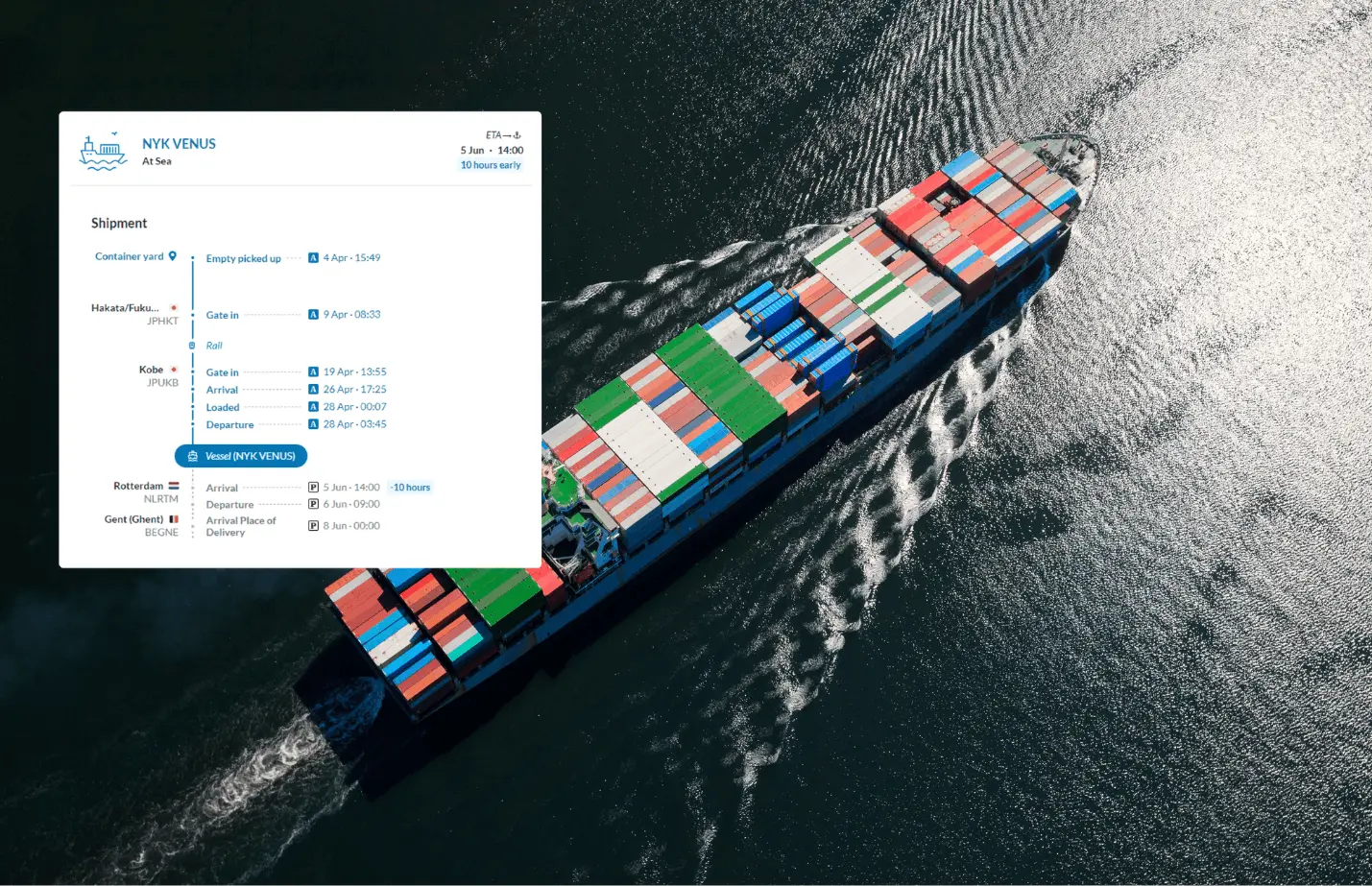
From there, tracking information, from empty container pickup to current location to vessel position, stays visible in the same window, pulled from a variety of providers and including predictive elements that factor in vessel weather conditions, engine speed, and port congestion rather than relying on static schedules alone.
Documentation, filed and generated automatically
Documentation moves into that same window too. Shipping instructions and VGM can be filed directly through BuyCo. For temperature-controlled goods, reefers are managed seamlessly: exporters can pre-set specific temperature and ventilation requirements directly within booking templates so they carry over automatically for perishable lanes. For US exporters, Automated Export Filing can be submitted directly to US Customs from within the platform, pulling shipment data into the required format and returning an approval or rejection response. Trade documents can be uploaded, shared with specific participants based on access level, and downloaded or commented on directly. Exporters can also supply BuyCo with a document template, and the platform will populate it using existing shipment data, container numbers, PO numbers, SKUs, cargo descriptions, HS codes, to generate commercial invoices, packing lists, and weight certificates without manual assembly.
Bringing every partner into the same view
The coordination challenge gets addressed the same way. Any participant in a shipment, traders, consignees, customs brokers, drayage teams, can be invited into BuyCo with a defined level of access, with an in-platform chat function and task tracking replacing a lot of the status-check emails that would otherwise pile up.
Crucially, this collaboration extends directly to third-party logistics providers. Whether exporters negotiate rates directly with freight forwarders or have forwarders execute bookings on their behalf using carrier contracts, BuyCo integrates fully with forwarder systems. For forwarders with advanced tech setups, this is a completely electronic, system-to-system process via API. For smaller forwarders without internal API capabilities, they can simply be invited into BuyCo as interactive participants to collaborate and complete shipment milestones directly on the platform.
Consignees who only need visibility, without needing a full login, can be given a shareable tracking link instead, similar to tracking an Amazon package, so they can follow their container in real time on their own.
Turning visibility into negotiating leverage
And on the cost side, BuyCo helps exporters monitor free time usage, flag when a shipment is approaching the risk of exceeding it, and identify who’s liable for any resulting charges. The same visibility that helps with day-to-day execution also feeds into longer-term negotiating leverage: carrier benchmarks covering schedule reliability, booking turnaround times, and ETA reliability, along with average delays and transit times by port pair, give exporters real data to bring to the table when renegotiating contracts or adding new traffic lanes, accounting for real-world disruptions like port congestion or canal restrictions along the way.
Getting started without a learning curve
None of this requires a steep learning curve. Because BuyCo is built entirely by teams coming out of a long history in the ocean shipping industry, the software natively matches the natural sequential workflow of a shipment. Agricultural exporters tend to already be highly knowledgeable and hands-on about shipping, which is part of why onboarding onto BuyCo tends to be straightforward. Based on BuyCo’s onboarding experience, most users with existing shipping knowledge can be trained to use the platform in under two hours, after which they can generally operate it with minimal outside support.
Conclusion
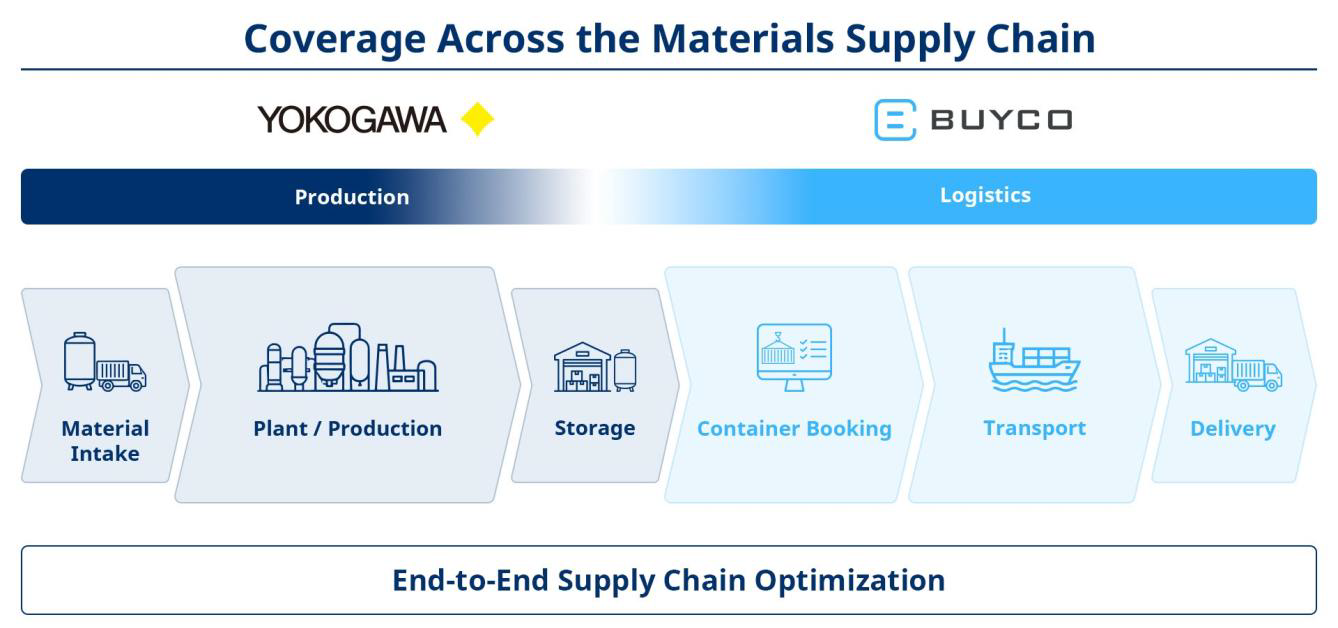
None of the individual problems agricultural exporters deal with, schedule changes, container rolls, documentation, perishability risk, cost exposure, are new, and none of them are unique to any one region or product. What makes them harder to manage is fragmentation: having to chase each issue through a different portal, spreadsheet, or email thread. BuyCo’s approach is to pull bookings, tracking, documentation, and partner communication into a single control tower. That doesn’t make ocean shipping simple. It does remove a lot of the manual work, error risk, and blind spots that come from managing that complexity across systems that were never designed to work together in the first place.
Frequently Asked Questions
Why is ocean freight booking and documentation so labor-intensive for agricultural exporters specifically?
Agricultural exporters tend to maintain close, direct relationships and direct contracts with shipping lines, which is generally seen as an advantage. But that direct relationship doesn’t usually come with a matching direct digital connection, so a lot of the booking, operations, and documentation work still has to be handled manually despite the strength of the carrier relationship itself.
Why do agricultural exporters struggle to keep up with ERD, cutoff, and schedule changes?
Disruptions and moving cutoffs are a recurring issue, especially in the US, where exporters report not being informed when an Estimated Time of Departure changes, even after containers are already moving, or when Earliest Receiving Dates get updated. This gets more complicated in large countries like the US or Brazil, where agricultural cargo often originates deep inland and travels by rail to the coast, since schedule changes and ERD or Latest Receiving Date changes can occur separately at both the rail terminal and the port.
What causes container rolls in agricultural exports, and why are they such a common problem?
Container rolls are one of the two most frequent problems agricultural exporters run into, alongside schedule changes. A shipment can be rolled for several different reasons: the carrier rolls it, the exporter needs to roll it, or the rail operator rolls it. Because rolls can originate from any of these sources, staying updated on roll status and getting the most current information quickly is a consistent priority.
Why does perishability make shipping delays riskier for agricultural exporters than for other industries?
Many agricultural products are either immediately perishable or don’t take much to spoil, including grain, hay, and frozen or chilled goods. That makes internal processing time critical, since any inefficiency in booking or documentation directly increases the risk that the product perishes before reaching its destination. Agricultural exporters also tend to ship seasonally, meaning volume and urgency both spike during specific periods of the year rather than staying constant.
Why do agricultural exporters end up managing so many different portals, spreadsheets, and emails just to track a shipment?
Before adopting a digital solution, exporters typically have to juggle multiple carrier e-commerce portals, separate tracking pages, and various spreadsheets to stay on top of their shipments, with information scattered across forwarder emails, carrier portals, and terminal portals. This creates blind spots in the supply chain, and it isn’t limited to smaller shippers. Larger exporters with higher container volumes don’t necessarily have better tooling, so the same fragmented process can simply repeat at a bigger scale.
Why is documentation considered a bigger challenge in agricultural exports compared to other cargo types?
Once cargo is moving, agricultural exporters have to generate and file shipping instructions, VGM submissions, export filings, phytosanitary certificates, commercial invoices, packing lists, and weight certificates, often with different requirements depending on the destination and the product. Keeping all of that cleanly organized, rather than scattered across systems, is described as a distinct challenge in the agricultural business, largely because of how many document types and product-specific requirements are involved.
How does a shipping delay or roll actually turn into a cost for an agricultural exporter?
Every disruption, whether it’s a schedule change, a roll, or a delay, eventually has a financial impact through free time usage. Once free time is at risk of being exceeded, detention or demurrage charges can apply, and determining who is liable for those charges is an ongoing challenge that directly affects the exporter’s costs.
How does BuyCo handle cargo that isn’t shipped entirely direct with the carrier, such as freight handled by forwarders?
BuyCo integrates directly with freight forwarders electronically. If an exporter uses a freight forwarder for their shipping, BuyCo can transmit electronic messaging seamlessly back and forth between the exporter and the forwarder’s internal system via API. For smaller forwarders without advanced systems, they can simply be invited to collaborate on the platform as a participant to view tracking data, share documents, and communicate via the shipment’s chat hub.
How fresh is the tracking and scheduling data displayed in the platform?
The data is updated instantly. BuyCo operates on an API-first framework, backed up by EDI, meaning that as soon as a carrier or data provider pushes a schedule revision, tracking update, or status change on their end, it is pushed directly to the platform in real time with zero structural delay.
Can the BuyCo platform accommodate specialized reefer requirements for perishable goods?
Yes. Reefers are fully supported as a standard container type. Shippers can input precise temperature and ventilation thresholds directly into booking requests. Furthermore, these configurations can be hardcoded into reusable shipment templates for specific trade lanes so exporters don’t have to re-enter the specs every time they book.