
Managing global container shipping in 2026 is increasingly complex, with shippers relying on multiple systems for booking, tracking, and communication across carriers and logistics partners.
Ocean freight software, also called ocean freight management software or container shipping management software, helps shippers plan, book, execute, track, document, and optimize container shipments across multiple ocean carriers. The best platforms combine booking and execution, container visibility, rate management, documentation, exception management, collaboration, analytics, and integrations with ERP and TMS systems.
This guide compares the 7 best ocean freight and container shipping software platforms in 2026 across execution, visibility, rate management, booking, documentation, compliance, and integration capabilities. The comparison is designed for BCOs, global shippers, importers, large exporters, manufacturers, retailers, and chemical companies looking for software to manage container shipping operations. Companies specifically comparing ocean freight visibility platforms can explore the dedicated visibility category.
The BuyCo Platform is an end-to-end ocean freight execution system with built-in visibility, designed specifically for large-volume shippers. In contrast, many platforms in the market are more specialized, focusing primarily on areas such as visibility, rate management, or operational workflows.
The seven platforms compared in this guide are BuyCo, Project44, Freightify, FourKites, INTTRA, Descartes, and CargoWise. BuyCo is designed for large-volume BCOs, importers, and exporters that need to manage ocean freight execution across the container shipping lifecycle, while other platforms in this comparison specialize in areas such as multimodal visibility, freight rate management, carrier connectivity, compliance, or freight-forwarder operations.
How We Evaluated the Best Ocean Freight Software
We evaluated ocean freight and container shipping management software based on its ability to support the operational requirements of containerized shipping. The main criteria were ocean freight specialization, booking and execution, multi-carrier connectivity, container visibility, rate management, document workflows, exception management, collaboration, analytics, and ERP/TMS integration.
We also considered the primary users each platform is designed for, including BCOs and large-volume shippers, importers and exporters, freight forwarders, and logistics service providers. This distinction is important because some platforms provide end-to-end container shipping management, while others specialize in a specific part of the ocean freight workflow.
How to Choose the Right Ocean Freight Software (Decision Guide)
- If you need end-to-end ocean freight execution (with built-in visibility) → BuyCo
- If you need real-time tracking → Project44 or FourKites
- If you need rate management → Freightify
- If you need carrier booking standardization → INTTRA
- If you need compliance & customs → Descartes
- If you need a forwarder-centric system → CargoWise
- If you want to replace spreadsheets, emails, and fragmented tools → BuyCo
Ocean Freight Software Comparison
| Platform | Core Strength | Best For | Platform Type |
| BuyCo | End-to-end ocean freight execution | BCOs, large importers and exporters | Ocean freight management software |
| Project44 | Multimodal visibility | Enterprises prioritizing shipment visibility | Supply chain visibility platform |
| FourKites | Multimodal visibility and predictive insights | Enterprises with multimodal supply chains | Supply chain visibility platform |
| Freightify | Rate management and quoting | Forwarders and pricing teams | Freight rate management software |
| INTTRA | Ocean carrier connectivity and booking | Shippers and forwarders needing standardized carrier connectivity | Ocean booking network |
| Descartes | Compliance and global trade | International logistics operations | Logistics and trade management platform |
| CargoWise | Logistics execution | Freight forwarders and 3PLs | Logistics execution platform |
Disclaimer: This list isn’t ranked. This article is an editorial comparison based on publicly available information as of 2026 and general category positioning. Feature availability, integrations, and deployment models may vary by contract, region, and implementation. Explore all options to find what works best for you.
7 Best Ocean Freight Software for Global Shippers in 2026
1. BuyCo Platform
The BuyCo Platform is an AI-powered ocean freight management and container shipping software designed for large-volume BCOs, importers, and exporters. It centralizes planning, carrier allocation, booking, execution, container tracking, documentation, collaboration, rate management, and analytics across the container shipping lifecycle. By connecting internal teams with carriers, freight forwarders, and other logistics partners, BuyCo provides a single source of truth for ocean freight operations.
Best For: Large-volume BCOs, global shippers, importers, and exporters seeking end-to-end ocean freight management software to centralize and automate container shipping operations.
The seven platforms compared in this guide are BuyCo, Project44, Freightify, FourKites, INTTRA, Descartes, and CargoWise. BuyCo is designed for large-volume BCOs, importers, and exporters that need to manage ocean freight execution across the container shipping lifecycle, while other platforms in this comparison specialize in areas such as multimodal visibility, freight rate management, carrier connectivity, compliance, or freight-forwarder operations.
When to use BuyCo?
BuyCo excels at transforming complex, manual shipping processes into a streamlined, automated workflow. The platform empowers shipping teams to move from reactive problem-solving to proactive strategy execution. By centralizing rate management, automating bookings based on your unique allocation strategy, and providing real-time tracking, BuyCo helps you reduce freight costs, minimize delays, and increase productivity. Its focus on collaboration ensures all stakeholders are aligned, eliminating communication silos and operational bottlenecks.
Features:
- AI-powered planning and carrier allocation to optimize cost and performance.
- Automated booking and execution across all carriers.
- Real-time container tracking with predictive ETAs.
- Centralized document management for streamlined compliance and collaboration.
- Advanced ocean freight analytics for cost, volume, and performance monitoring.
- Seamless API integrations with existing TMS and ERP systems.
2. Project44
Project44 is a leading supply chain visibility platform that provides real-time tracking across multiple transport modes, including ocean, road, rail, and air. It is widely adopted by global enterprises for its extensive carrier network and ability to aggregate shipment data from multiple sources. Businesses comparing this type of solution should evaluate dedicated ocean freight visibility platforms separately from end-to-end ocean freight software.
Best For: Companies whose primary need is multi-modal shipment visibility, particularly those complementing existing systems for execution and rate management.
When to use Project44?
If your primary goal is enhancing end-to-end shipment visibility, Project44 is a strong option. It excels at standardizing tracking data and delivering reliable, real-time insights across complex supply chains.
Depending on your operational setup, companies may complement visibility platforms like Project44 with additional systems for functions such as booking, rate management, and documentation, particularly when looking for more execution-focused capabilities.
Features:
- Predictive tracking and Estimated Times of Arrival (ETAs).
- Extensive geographic visibility with a large carrier network.
- API connections for integration with other systems.
3. Freightify
Freightify is a digital freight platform focused on rate management, procurement, and customer quoting for logistics providers and shippers. It helps centralize carrier rate data and streamline the process of generating and sharing freight quotes across teams and customers.
Best For: Freight forwarders and logistics teams prioritizing rate management, quoting, and procurement efficiency across ocean and air freight.
When to use Freightify?
Freightify is designed to simplify and standardize freight rate management by aggregating carrier rates and enabling faster, more accurate quoting workflows. It helps teams reduce manual effort, improve pricing consistency, and respond more quickly to customer requests.
Depending on operational requirements, companies may integrate Freightify with additional systems to support broader capabilities such as shipment execution, real-time visibility, or end-to-end supply chain management.
Features:
- Centralized freight rate management across carriers
- Automated quotation and pricing workflows
- Carrier rate comparison and procurement tools
- Integrations with carrier systems and logistics platforms
4. FourKites
FourKites is a real-time supply chain visibility platform that provides end-to-end tracking across multiple transportation modes, including ocean, road, rail, and air. It leverages a large network of carriers and data sources to deliver predictive insights and improve shipment transparency.
Best For: Enterprises seeking advanced, real-time supply chain visibility and predictive insights across global, multi-modal operations.
When to use FourKites?
FourKites is designed to enhance visibility across the supply chain by aggregating data from carriers, telematics, and external sources to provide accurate, real-time tracking and predictive ETAs. It helps organizations proactively manage delays, improve coordination, and increase overall supply chain transparency.
Depending on operational needs, companies may integrate visibility platforms like FourKites with additional systems to support functions such as booking, rate management, and end-to-end execution, particularly when looking for a more comprehensive operational platform.
Features:
- Real-time shipment tracking across multiple transport modes
- Predictive ETAs and exception management
- Extensive carrier and partner network integrations
- Advanced analytics and supply chain insights
5. INTTRA (by e2open)
Now part of the e2open platform, INTTRA has long been a major ocean booking network connecting shippers and carriers. It functions as a foundational layer for initiating and managing shipment bookings across a vast network.
Best For: Companies needing a standardized, basic tool for booking container space and submitting shipping instructions across a wide carrier network.
When to use INTTRA?
INTTRA simplifies the booking process by providing a standardized interface to connect with a large number of ocean carriers. It is widely used as a foundational booking network within global shipping operations.
Depending on operational needs, companies may complement INTTRA with additional platforms for capabilities such as advanced planning, analytics, automation, and broader collaboration across the shipment lifecycle.
Features:
- Centralized ocean schedules from multiple carriers.
- Track and trace capabilities for booked shipments.
- Specialized shipping instructions for NVOCCs and VOCCs.
6. Descartes Systems Group
Descartes is a global logistics technology provider offering a broad suite of supply chain solutions, including transportation management, customs compliance, and global trade intelligence. Its platform supports multi-modal logistics operations with a strong emphasis on regulatory compliance and network connectivity.
Best For: Companies needing a comprehensive logistics platform with strong compliance, customs, and multi-modal transportation capabilities, particularly those operating across international markets.
When to use Descartes?
Descartes provides a wide range of tools designed to help organizations manage transportation, regulatory requirements, and global trade operations within a connected ecosystem. It manages areas such as customs filing, denied party screening, and compliance-driven workflows.
Depending on specific operational needs, companies may use Descartes alongside other specialized platforms to support deeper functionality in areas such as real-time visibility, ocean-specific execution, or advanced collaboration across stakeholders.
Features:
- Global trade compliance and customs filing solutions
- Multi-modal transportation management (TMS)
- Denied party screening and regulatory intelligence
- Network-based connectivity across logistics partners
7. CargoWise
CargoWise is a comprehensive logistics execution platform built for service providers, including freight forwarders and customs brokers. Its strength lies in its extensive functionality that covers multiple facets of the supply chain beyond just ocean freight.
Best For: Logistics service providers (3PLs, forwarders) who need a single, integrated system to manage operations for multiple clients across various modes.
When to use CargoWise?
As a single-platform solution, CargoWise is widely used by logistics service providers to manage complex transactions and multi-client operations. For shippers, access and visibility may depend on how their logistics partners configure and share data within the system. In many cases, this means working through a forwarder’s setup rather than directly managing all operations and analytics within a dedicated shipper platform.
Features:
- International forwarding and customs clearance modules.
- Real-time data visibility across operations.
- Comprehensive compliance management system.
What is Ocean Freight Software?
Ocean freight software, also referred to as ocean freight management software or container shipping management software, is a logistics platform designed to manage container shipping operations across the full lifecycle:
Core functions include:
- Planning and carrier allocation
- Rate management and procurement
- Booking and execution
- Container tracking and visibility
- Documentation and compliance
- Performance analytics
Unlike general-purpose transportation management systems, ocean freight management software is optimized for the requirements of containerized maritime logistics. Depending on the platform, it can serve as the central system for planning, booking, executing, tracking, documenting, and analyzing ocean shipments across multiple carriers and logistics partners.
Key Features to Look for in an Ocean Freight Platform
When evaluating solutions, prioritize platforms that offer a comprehensive feature set designed for global shippers. According to market analysis, the best systems integrate multiple core functions to provide a holistic solution.
Centralized Planning and Rate Management
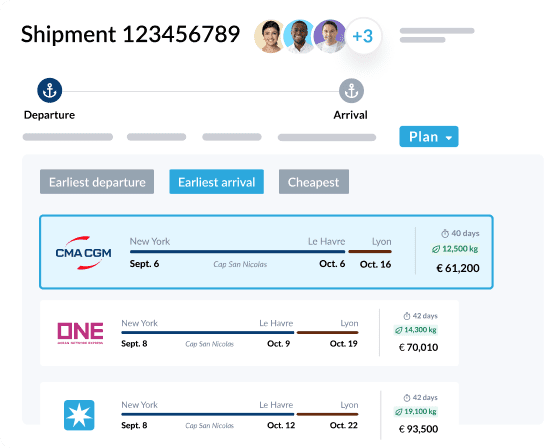
The ability to store all carrier contracts, rates, and allocations in one place is fundamental. The best platform to compare ocean freight rates will allow you to run simulations and make data-driven allocation decisions based on cost, transit time, carbon emissions, and carrier reliability.
Automated Booking and Execution
Your software should allow you to automate the booking process based on your pre-defined strategy. This means sending requests directly to carriers and forwarders via EDI or API without manual intervention, saving significant time and reducing the risk of human error.
Real-Time Visibility and Tracking
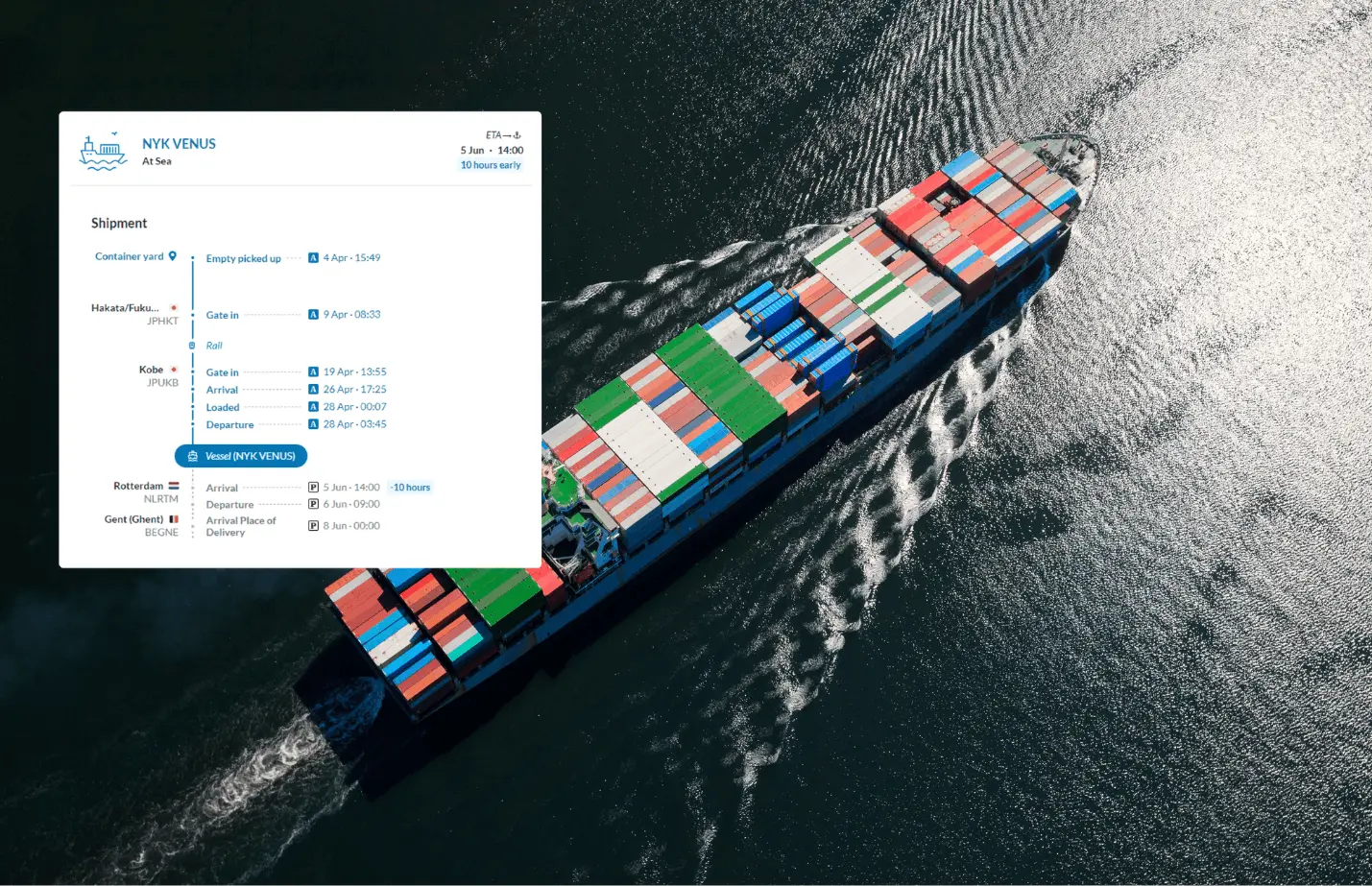
For ocean freight software, real-time visibility should connect tracking data with the broader shipping workflow. Companies whose primary requirement is visibility itself should evaluate specialized ocean freight visibility platforms, where carrier data, AIS, terminal information, predictive ETAs, and exception management are core evaluation criteria.
Automated Document Management
A centralized repository for all shipping documents (e.g., bills of lading, packing lists, VGM declarations) is critical. Top-tier platforms automate the creation and sharing of these documents, ensuring all partners have the right information at the right time for smooth customs clearance and compliance.
Advanced Analytics and Reporting
The leading ocean freight analytics software provides intuitive dashboards to monitor carrier performance, track spend against budget, analyze CO2 emissions, and identify opportunities for optimization. This transforms your shipping data from a simple record into a strategic asset.
Seamless Integrations
The best ocean freight software that integrates with TMS and ERP systems via robust APIs is essential. This creates a connected and automated supply chain ecosystem, eliminating data silos and ensuring information flows freely between your most critical business systems.
Why is Specialized Ocean Freight Software Important?
The global supply chain remains vulnerable to disruptions, and the ocean freight industry’s traditional reliance on manual processes and fragmented systems amplifies these challenges. Without a specialized platform, shippers face:
- High Operational Costs: Manual data entry, endless email chains, and inefficient booking processes result in wasted hours and inflated costs.
- Poor Visibility: A lack of reliable, real-time information makes it impossible to anticipate delays, manage exceptions, or keep stakeholders informed.
- Increased Risk of Errors: Manual document handling and siloed communication lead to costly mistakes in compliance, booking, and invoicing.
- Inability to Optimize: Without centralized data and analytics, you cannot effectively compare carrier performance, analyze total landed costs, or make strategic improvements.
Specialized software directly counters these issues by providing end-to-end visibility, automating repetitive workflows, and delivering the data needed for confident, informed decision-making.
How to Choose the Right Ocean Freight Software for Your Business
Selecting the right software requires a clear understanding of your company’s unique needs. Before making a decision, ask your team the following questions:
- What are our primary pain points? Are you struggling most with visibility, high freight costs, manual booking tasks, or communication breakdowns with partners? Prioritize a solution that solves your biggest problem first.
- What is our shipment volume? Large-volume BCOs, importers, exporters, manufacturers, and global shippers typically need container shipping management software capable of coordinating operations across multiple carriers, freight forwarders, locations, and internal teams. Platforms such as BuyCo are designed specifically for these complex, high-volume ocean freight operations.
- Do we need a specialized ocean platform or a multi-modal TMS? If the vast majority of your freight is containerized ocean shipping, a specialized platform will offer deeper, more relevant functionality than a general-purpose TMS.
- How important is collaboration? Do you need a system that brings your internal teams, carriers, and forwarders together in one collaborative space to eliminate email and spreadsheets?
What existing systems does it need to connect with? Ensure the platform has proven API capabilities to integrate with your ERP, warehouse management system, or other critical software.
Ocean Freight Software Ecosystem
Modern ocean freight operations often rely on a combination of tools. The platforms below represent different roles within the ocean freight software ecosystem. This comparison focuses on the primary use case, not every feature each platform offers.
| Platform | Primary Function | Best For | Role in Ecosystem |
| BuyCo Platform | Ocean freight execution | Large-volume shippers | Core execution system |
| CargoWise | Logistics execution platform | Freight forwarders / 3PLs | Operational backbone |
| Project44 | Supply chain visibility | Multi-modal tracking | Visibility layer |
| FourKites | Supply chain visibility | Enterprise tracking & predictive insights | Visibility layer |
| INTTRA (e2open) | Ocean booking network | Carrier connectivity | Booking layer |
| Freightify | Rate management & procurement | Forwarders & pricing teams | Procurement layer |
| Descartes Systems Group | Compliance & global trade | International operations | Compliance layer |
Key Takeaways
- Ocean freight software centralizes container shipping operations
- Different platforms specialize in execution, visibility, or procurement
- Large shippers benefit most from end-to-end ocean freight platforms like BuyCo
- Visibility tools like Project44 and FourKites complement execution systems
- Choosing the right tool depends on your primary operational bottleneck
Frequently Asked Questions
What is the best container shipping management software?
The best container shipping management software depends on the operational scope required. Large-volume BCOs, importers, and exporters should prioritize platforms that combine planning, booking, execution, container visibility, documentation, collaboration, rate management, analytics, and enterprise integrations. BuyCo combines these capabilities in an ocean-focused platform designed for large-volume shippers.
Is ocean freight software the same as container shipping software?
The terms overlap significantly. Ocean freight software focuses on managing maritime freight operations, while container shipping software emphasizes the management of containerized shipments. Platforms designed for end-to-end ocean freight management commonly support both requirements, including planning, booking, execution, tracking, documentation, collaboration, and analytics.
What is the best ocean freight software for BCOs?
BCOs should prioritize ocean freight software that gives their internal logistics teams direct control over carrier and forwarder collaboration, booking, execution, container visibility, documentation, rates, analytics, and integrations. BuyCo is designed specifically for large-volume shippers and BCO-led ocean freight operations.
What is the best ocean freight software for large shippers?
For large-volume shippers, the best software is one that provides end-to-end control over the entire shipping lifecycle. The BuyCo Platform is specifically designed for this purpose, combining AI-powered planning, automated execution, real-time visibility, and collaborative analytics to manage complex global operations efficiently.
How does ocean freight software improve visibility?
Modern platforms improve visibility by integrating data from multiple sources in real time. This includes direct API and EDI connections with ocean carriers, Automatic Identification System (AIS) data from vessels, and status updates from ports and terminals. This creates a single, accurate, and reliable view of a container’s journey, allowing you to manage by exception.
Can an ocean freight software integrate with my existing TMS?
Yes, many leading ocean freight platforms are built for integration. The best solutions, including the BuyCo Platform, offer robust Application Programming Interfaces (APIs) that allow for seamless connection with your existing Transportation Management System (TMS), Enterprise Resource Planning (ERP), and other business systems. This ensures data flows freely across your entire organization, eliminating manual re-entry.
What is the difference between ocean freight software and a TMS?
Ocean freight software focuses specifically on container shipping, while a TMS covers multiple transport modes but often lacks deep ocean-specific functionality.
What is the best ocean freight software for global shippers?
For high-volume global shippers, ocean freight software should centralize planning, booking, execution, container visibility, documentation, collaboration, rate management, analytics, and integrations across carriers and logistics partners. BuyCo is designed specifically for this end-to-end operating model, while other platforms in this comparison specialize in areas such as multimodal visibility, rate management, carrier connectivity, compliance, or freight-forwarder operations.
Do I need both visibility and execution software?
In many cases, yes. Many companies combine execution platforms with visibility tools depending on their supply chain complexity.
Ready to gain visibility and control over your container shipping?
Discover how the BuyCo Platform can help you streamline processes, reduce costs, and empower your team.