
Ocean freight analytics software helps shippers measure carrier reliability, freight costs, transit times, forwarder performance, emissions, and operational exceptions. The most suitable platform depends on whether the team needs analytics inside an execution system, market-rate benchmarking, industry schedule data, or raw container events for custom reporting.
This guide compares seven ocean freight analytics platforms and explains which option fits large-volume shippers, procurement teams, analysts, freight forwarders, and data-mature technology teams.
What Is Ocean Freight KPI and Analytics Software?
Ocean freight KPI and analytics software collects, centralizes, and visualizes data from container shipping operations. It helps logistics teams measure:
- Carrier and schedule reliability
- Actual versus scheduled transit time
- Freight cost and cost per TEU
- Carrier allocation fulfillment
- Detention and demurrage
- Booking and documentation performance
- Freight forwarder and 3PL service levels
- Container volumes and lane performance
- CO2e intensity and total logistics emissions
Ocean cargo software can also compare carrier rates, provide real-time container tracking, manage shipping documents, support route planning, and connect shippers with carriers and customs stakeholders. Gartner describes the category as software that combines these operational, planning, communication, and analytics functions for ocean transportation management. [1]
The best ocean freight analytics software connects performance data to daily operations. A booking, carrier update, vessel event, document submission, or exception can feed a KPI dashboard without manual spreadsheet work. Teams can then use the result to adjust allocations, select routes, manage forwarders, prevent demurrage, or support carrier negotiations.
Three Types of Ocean Freight Analytics Platforms
The market includes three main platform types.
Execution-plus-analytics platforms
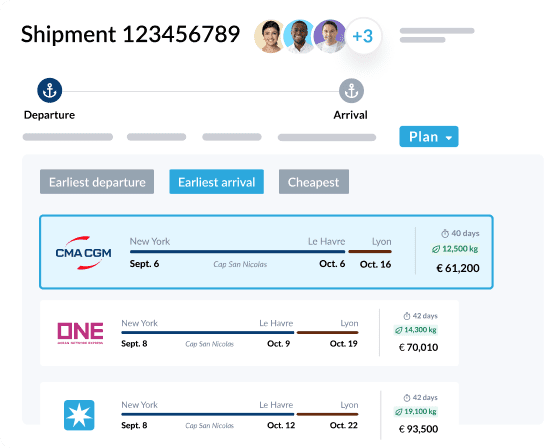
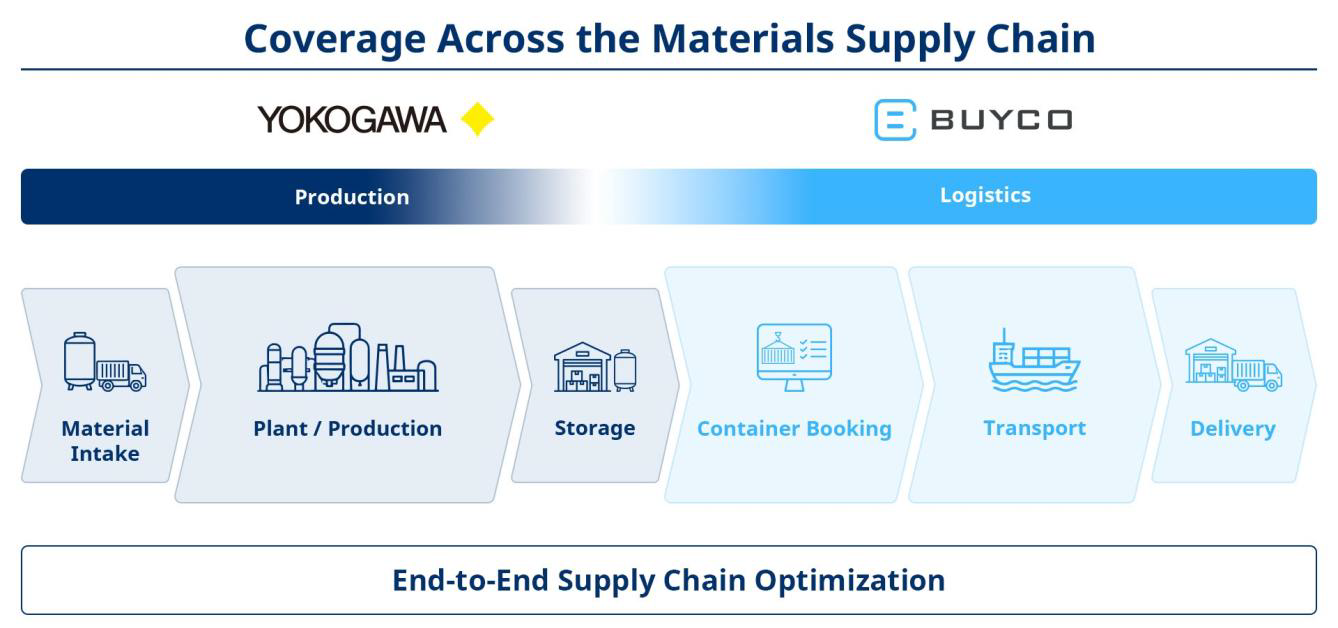
These platforms combine ocean freight planning, booking, tracking, document management, partner collaboration, and reporting. Analytics comes from the same operational workflow that manages the shipment.
BuyCo fits this model. Its Reporting & Analytics module uses booking, tracking, carrier, forwarder, document, cost, and exception data to create operational dashboards.
This model suits large-volume importers and exporters that want:
- Shipment-level and historical KPI reporting
- Carrier and forwarder scorecards
- Booking and allocation analysis
- Freight cost and demurrage monitoring
- Planning and execution in one system
- Real-time events connected to performance metrics
Specialist benchmark and market-intelligence tools
Specialist tools focus on a defined data category. Examples include:
- Rate benchmarking and tender intelligence from Xeneta
- Industry schedule reliability research from Sea-Intelligence
- Trade-flow and freight-market analysis from Kpler
These platforms help procurement teams and analysts understand the market. They may complement an execution system when a shipper also needs shipment-level operational data.
Container-event-data APIs
API-based tools provide standardized container milestones and event data. VIZION is an example of this model. A technology team can use the data to build its own dashboards, carrier scorecards, data warehouse, or custom application.
This approach suits organizations with:
- Internal data engineering resources
- Existing business intelligence tools
- Custom KPI definitions
- A need to combine container events with ERP, TMS, or finance data
The main distinction is the connection between data and action. An execution-plus-analytics platform can turn an event into a workflow, while a benchmark tool provides external context and an API supplies data for a custom system.
How to Choose the Right Analytics Platform
A platform should match the team’s primary decision.
- Large-volume importers and exporters: An execution-plus-analytics platform such as BuyCo provides operational KPIs, booking and planning workflows, tracking, document management, and partner performance reporting.
- Procurement teams: Xeneta supports rate benchmarking, tender analysis, and carrier comparisons using market data. Sea-Intelligence provides industry schedule reliability benchmarks.
- Shippers focused on carrier performance from tracking data: Portcast provides a KPI Dashboard for carrier reliability, lane performance, and detention and demurrage analysis. [2]
- Carriers and 3PLs with broad logistics operations: Descartes provides shipment, cost, lane, and carrier analytics within its TMS environment.
- Analysts and commodity shippers: Kpler focuses on ocean trade flows, vessel movements, cargo volumes, and freight-market intelligence.
- Data-mature technology teams: VIZION provides container event data for custom KPI development.
Planning, Execution, and Analytics
The best ocean freight planning software should connect planned activity with actual results. A planning system can show intended carrier allocations, sailing schedules, shipment volumes, and route choices. An analytics system can then compare those plans with bookings, departures, arrivals, costs, exceptions, and emissions.
This connection helps teams:
- Plan carrier allocations and sailing schedules.
- Track actual bookings and container events.
- Identify deviations from the plan.
- Measure the cost, service, and emissions impact.
- Adjust future routes, carriers, and volumes.
A specialist rate or reliability tool can improve planning decisions, but an execution platform provides the operational context needed to act on them.
Platform Comparison Matrix
| Platform | Primary data source | Carrier reliability | Schedule reliability | Transit-time variance | Rate or cost benchmarking | Forwarder scorecards | CO2e reporting | Planning and execution | Integrations or API | Native analytics in execution |
| BuyCo | Bookings, carrier interactions, tracking events, documents, costs, and exceptions | Shipment-level carrier KPIs | Actual versus scheduled events | By carrier, lane, shipment, and period | Internal freight spend and cost per TEU | Yes | Shipment, carrier, and lane reporting | Booking, planning, tracking, documents, and partner workflows | API connections with TMS and ERP systems, including SAP and Oracle | Yes |
| Portcast | Tracking data and completed voyages | Carrier and lane reliability | Based on actual versus scheduled performance | By carrier, lane, and port pair | Operational trends rather than primary market-rate benchmarking | Not the primary focus | CO2e intensity and total logistics emissions dashboards | Visibility, schedules, exceptions, and recommendations | API available | No |
| Xeneta | Contracted and spot market rates, schedules, and carrier data | Market-based carrier comparisons | Carrier reliability and schedule views | Market and carrier analysis | Primary focus | Not the primary focus | Carrier comparisons can include emissions data | Tender and procurement planning | Product integrations and data access | No |
| Sea-Intelligence | Industry research and carrier schedule data | Industry-level comparison | Primary focus | Trade-lane reliability context | No primary rate platform | No | No primary emissions platform | No execution workflow | Research and reporting access | No |
| Descartes | TMS, shipment, carrier, cost, and network data | Shipment and carrier analytics | Available through operational reporting | Shipment and lane analysis | Cost and margin reporting | Depends on configuration and workflow | Emissions reporting by mode and carrier available | TMS planning and execution | Descartes ecosystem and network integrations | Within the TMS environment |
| VIZION | Standardized carrier container events | Custom calculation | Custom calculation | Custom calculation | Requires customer data | Requires customer data | Requires customer data | No full booking/document execution workflow comparable to an ocean execution platform | API and data delivery | No |
| Kpler | Vessel movements, trade flows, cargo volumes, and market data | Market-level and carrier context | Port and vessel movement context | Market and route analysis | Freight-market intelligence | No primary forwarder scorecards | Not the primary focus | Market-informed planning | Data and analytics access | No |
Information reviewed August 2026
The matrix separates operational analytics from external market intelligence. A shipper that needs to govern its own carriers and forwarders requires shipment-level data. A procurement team may also need market-rate benchmarks, while a data team may prefer an event API.
Top Ocean Freight Analytics Platforms in 2026
1. BuyCo: Operational Ocean Freight KPI Analytics
What it is: BuyCo is an ocean freight execution platform with a built-in Reporting & Analytics module for large-volume importers and exporters. The platform connects booking, planning, carrier coordination, tracking, documents,exceptions, and reporting in one workflow.
Best for: Large-volume shippers that need operational analytics across carrier performance, freight costs, transit times, forwarder governance, volumes, and CO2 emissions.
Why BuyCo Fits Operational Analytics
Many shippers assemble performance reports from spreadsheets, carrier portals, forwarder updates, and separate business intelligence tools. This creates delays and makes it difficult to maintain consistent KPI definitions.
BuyCo captures data during daily shipping activity. Booking decisions, carrier interactions, tracking events, documents, and exceptions can feed the same reporting layer. This gives teams a shared view of performance by carrier, lane, shipment, period, forwarder, customer, or product.
The platform supports:
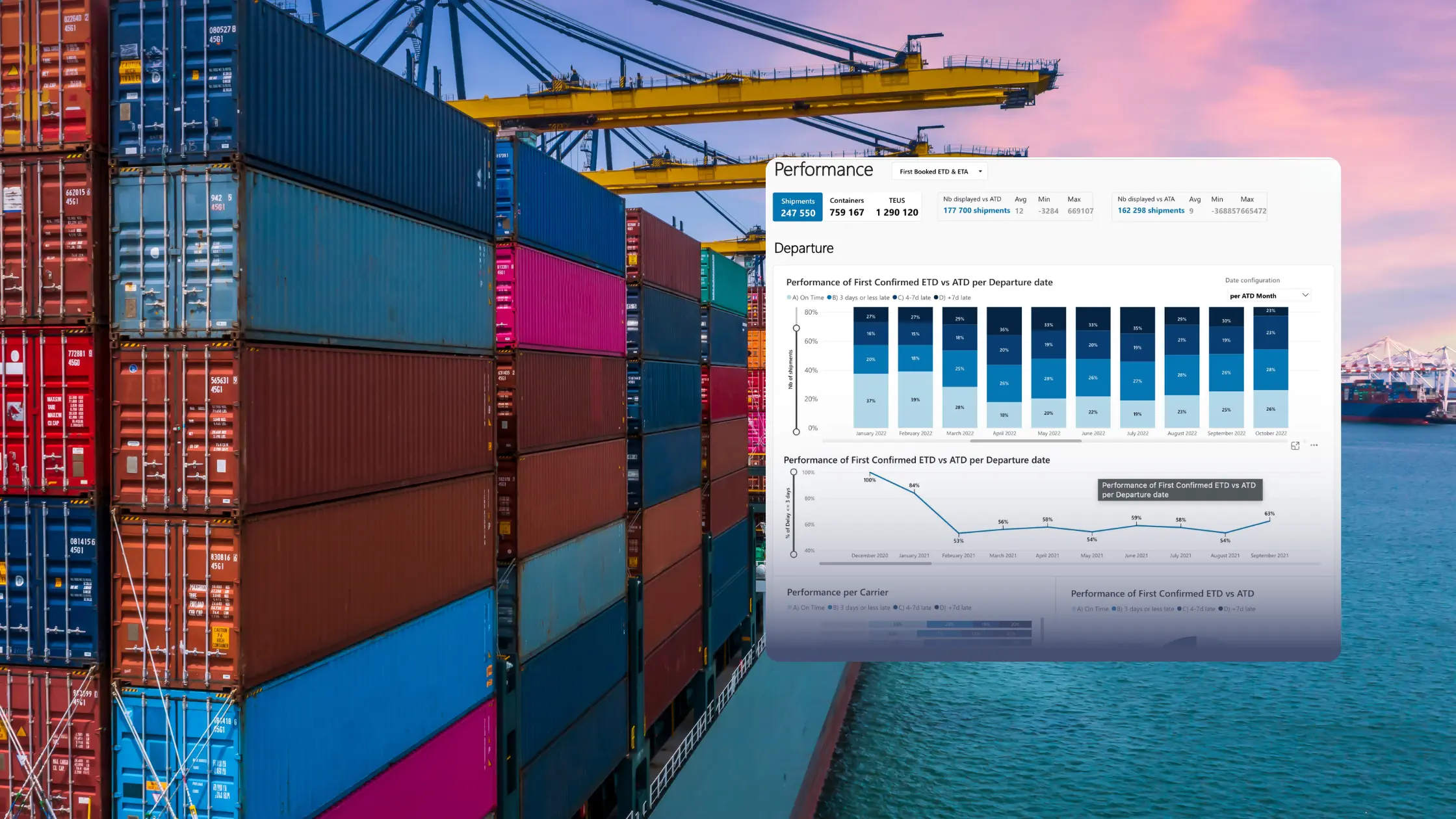
- Carrier reliability analysis: Measure on-time departure, on-time arrival, schedule adherence, rollover frequency, and allocation fulfillment.
- Carrier benchmarking: Compare carriers using the same definitions, trade lanes, time windows, and operational data.
- Transit-time analysis: Compare scheduled transit time with actual transit time and identify recurring lane or carrier delays.
- Freight cost analysis: Track freight spend and cost per container or TEU by carrier, lane, shipment, and period.
- Forwarder and 3PL scorecards: Review booking accuracy, document timeliness, and exception handling across partners.
- Detention and demurrage analysis: Monitor incidents and costs by carrier, lane, location, forwarder, or shipment.
- Planning and allocation analysis: Compare contracted or planned carrier volumes with actual bookings and shipped volumes.
- CO2 reporting: Track emissions by shipment, carrier, and trade lane for sustainability reporting.
- Exception management: Review missed cutoffs, rollovers, amendments, delays, and resolution times.
KPI Coverage in the BuyCo Platform
- On-time departure by carrier and trade lane
- On-time arrival by carrier and port pair
- Scheduled versus actual transit time
- Freight cost per TEU, shipment, and lane
- Carrier allocation versus actual volume
- Detention and demurrage incidence and cost
- Forwarder and 3PL performance scorecards
- Rolling container volume by period
- CO2e emissions per shipment, carrier, and lane
- Exception rates and resolution times
BuyCo also connects with TMS and ERP systems through API connections, including SAP and Oracle. This allows planned volumes and external business data to support allocation, cost, and performance reporting.
Ideal profile: Mid-sized and large shippers that want to connect ocean freight planning, execution, visibility, and analytics without building a separate reporting infrastructure.
Learn more about BuyCo Reporting & Analytics
2. Portcast: Carrier and Lane Performance Analytics
What it is: Portcast is a supply chain visibility and analytics platform that turns tracking data and completed voyages into carrier performance insights.
Best for: BCOs, manufacturers, and logistics service providers that need carrier, lane, port, and detention and demurrage analysis from shipment-tracking data.
The Portcast platform includes:
- Carrier reliability
- Lane performance
- Detention and demurrage trends
- Transit-time performance
- Port and transshipment delays
- Real-time container tracking
- Predictive ETAs and ETDs
- CO2e intensity and total logistics emissions
- Sailing schedules and exception reporting
- API-based integration
Teams can compare actual performance with published schedules and filter results by carrier, trade lane, port, or voyage. This supports carrier selection and procurement discussions based on observed shipment performance.
Portcast is primarily a visibility and analytics platform. BuyCo covers a broader operational workflow that includes bookings, documents, forwarder management, allocation tracking, and execution-linked reporting.
3. Xeneta: Ocean Freight Rate and Carrier Benchmarking
What it is: Xeneta provides ocean and air freight market intelligence based on contracted and spot rates from shippers and freight forwarders.
Best for: Procurement teams that need market-rate benchmarks, tender analysis, carrier comparisons, and pricing context for contract negotiations.
Xeneta’s ocean product supports:
- Rate benchmarking by trade lane
- Contract and spot-rate analysis
- Carrier comparisons
- Tender benchmarking
- Market trend analysis
Xeneta’s carrier and rate data helps teams compare market position across carriers and use the results in procurement decisions. [3]
Xeneta is a strong fit for ocean carrier benchmarking when the question concerns market position. BuyCo is designed for benchmarking carriers within the shipper’s own operations, using actual booking, tracking, cost, and exception data.
4. Sea-Intelligence: Schedule Reliability Research
What it is: Sea-Intelligence is a specialist research and analytics firm focused on ocean carrier schedule reliability.
Best for: Procurement teams, analysts, and supply chain strategists that need industry-level carrier reliability data for negotiations and strategic carrier selection.
Sea-Intelligence provides:
- Carrier schedule reliability rankings
- Trade-lane comparisons
- Port-pair reliability analysis
- Blank sailing analysis
- Historical performance trends
- A standardized schedule reliability methodology
The data describes industry-level performance. It does not replace shipment-level reporting from a shipper’s own bookings and container events.
For that reason, Sea-Intelligence works as a schedule reliability benchmark alongside an operational platform. BuyCo can show whether a carrier met its commitments for the shipper’s own cargo, while Sea-Intelligence provides broader market context.
5. Descartes: TMS-Based Logistics Analytics
What it is: Descartes is a supply chain software provider with products covering TMS, compliance, trade data, and logistics network management.
Best for: Carriers, 3PLs, and enterprise shippers that already use the Descartes ecosystem and need shipment, carrier, cost, and lane reporting within a broad TMS environment.
Descartes analytics can support:
- Shipment and carrier performance reporting
- Lane and facility drill-downs
- Cost and margin analysis
- Exception reporting
- At-risk shipment identification
- Recurring reports
- Configurable dashboards
- Trade intelligence through the Descartes Datamyne environment
Descartes suits organizations with broad, multimodal logistics requirements. BuyCo is more focused on ocean import and export operations, with analytics for carrier scorecards, forwarder performance, demurrage, allocation, and emissions.
6. VIZION: Container Event Data for Custom KPIs
What it is: VIZION is a container tracking data API that provides standardized container events from ocean carriers.
Best for: Data-mature shippers, logistics technology companies, and internal technology teams that want to create their own KPI models and dashboards.
VIZION provides the data layer for:
- Container milestone tracking
- Actual departure and arrival analysis
- On-time performance calculations
- Transit-time variance
- Exception reporting
- Custom carrier scorecards
- Data delivery through API, dashboards, or spreadsheet reports
An API approach gives a technology team control over data models and KPI definitions. It also requires responsibility for data storage, calculation logic, dashboard development, and maintenance.
BuyCo is a better fit for teams that need pre-built ocean freight analytics connected to bookings, documents, forwarders, planning, and execution workflows.
7. Kpler: Ocean Trade Flow and Freight-Market Intelligence
What it is: Kpler provides market intelligence on vessel movements, cargo flows, commodity volumes, and freight markets.
Best for: Commodity shippers, traders, analysts, and supply chain strategists that need a macro view of ocean trade and market conditions.
Kpler supports analysis of:
- Vessel movements and cargo flows
- Real-time container tracking
- Terminal-level congestion and waiting times
- Predictive vessel schedules
- Predictive ETAs, ETDs, and port calls
- Commodity import and export volumes
- Origin and destination patterns
- Freight-market activity and supply-demand conditions
Kpler helps teams understand external market conditions. It does not primarily measure a shipper’s own booking accuracy, forwarder performance, allocation fulfillment, or document timeliness. BuyCo covers those operational KPIs within the shipper’s execution process.
Ocean Freight KPIs to Track
A useful KPI framework defines the metric, denominator, time window, and source data before teams compare results. This prevents different departments from using the same term for different calculations.
Carrier and Schedule Reliability
Carrier reliability measures how consistently a carrier meets agreed service commitments over a defined period.
Common measures include:
- On-time departure rate: On-time departures divided by total eligible departures during the reporting period.
- On-time arrival rate: On-time arrivals divided by total eligible arrivals during the reporting period.
- Schedule reliability: Sailings that meet the defined arrival or departure tolerance divided by all measured sailings.
- Rollover rate: Rolled bookings divided by confirmed bookings for the same period.
- No-show rate: Confirmed bookings that do not load divided by confirmed bookings.
- Transit-time variance: Actual transit time minus scheduled transit time, measured for completed shipments.
- Allocation fulfillment: Actual shipped volume divided by contracted or planned carrier volume.
The time window should be consistent. Monthly, quarterly, and rolling 90-day views can show different patterns. A carrier comparison should also use the same trade lane, port pair, shipment type, and tolerance for every carrier.
Lane and Transit-Time Performance
Lane analytics shows where service problems occur. Teams should compare performance by:
- Origin and destination port
- Carrier
- Vessel or service string
- Direct or transshipment routing
- Container type
- Booking period
- Actual departure and arrival period
A lane-level view can identify whether delays arise from a carrier schedule, port congestion, transshipment, documentation, missed cutoffs, or a planning decision.
Freight Cost KPIs
- Freight cost per TEU by carrier and lane
- Total freight spend by period
- Cost per shipment or container
- Surcharge and accessorial cost
- Detention and demurrage cost as a share of freight spend
- Contracted rate versus paid rate
- Rate variance by carrier and trade lane
- Cost of rolled, amended, or rebooked shipments
A market benchmark tool such as Xeneta can show how contracted rates compare with external market data. An operational platform such as BuyCo can show the costs actually associated with the shipper’s shipments and decisions.
Operational KPIs
- Booking confirmation lead time
- Booking acceptance rate
- Missed cutoff rate
- Document submission accuracy
- Document submission timeliness
- Verified Gross Mass, or VGM, submission status
- Shipping instruction amendment rate
- Exception rate
- Exception resolution time
- Carrier allocation fulfillment
- Container volume by period
These measures connect execution activity with service results. For example, a missed documentation deadline may lead to a missed cutoff, while a rollover may increase storage or demurrage exposure.
Forwarder and 3PL Performance
The best freight forwarder performance tracking software gives shippers an independent view of partner service levels. Useful measures include:
- Booking accuracy rate
- Booking confirmation lead time
- On-time document submission
- VGM and shipping instruction accuracy
- Amendment frequency
- Exception notification speed
- Exception resolution time
- Communication response time
- Detention and demurrage incidents
- Cost variance by forwarder
- Allocation or routing compliance
Forwarder scorecards should use the same definitions for every partner. A scorecard should also separate delays caused by the forwarder from delays caused by the carrier, port, shipper, or customs process.
Detention and Demurrage Trends
Detention and demurrage analytics should identify:
- The carrier and terminal involved
- The container and shipment
- Free-time terms
- Last free day
- Empty-return date
- Amount charged
- Root cause
- Whether the delay resulted from documentation, customs, appointment availability, equipment, or operational planning
A trend view can show whether charges are concentrated by forwarder, lane, terminal, carrier, or container type. Teams can then change planning rules, improve document timing, or negotiate terms with better evidence.
Sustainability KPIs
The best software to reduce shipping CO2 emissions should connect emissions data to planning and execution decisions. Useful measures include:
- CO2e per TEU
- CO2e per container
- CO2e per shipment
- CO2e per tonne or cargo unit
- CO2e intensity by carrier
- CO2e intensity by trade lane
- Total logistics emissions
- Emissions by routing or service type
- Progress against an emissions target
A platform should show the calculation method, activity data, distance assumptions, vessel or carrier factors, and reporting period. Teams can then compare route and carrier choices consistently.
IMO’s 2023 strategy sets a direction for reducing greenhouse-gas emissions from international shipping, making shipment-level emissions reporting increasingly relevant to freight planning and procurement. [4]
BuyCo reporting can help teams review CO2 emissions by shipment, carrier, and trade lane. A procurement team may use this information with rate, service, and capacity data to select a lower-emission option that still meets operational requirements.
How to Evaluate Freight Analytics Software
A structured evaluation helps teams compare platforms with different data models and purposes.
1. Confirm the Data Source
Ask whether the platform uses:
- The shipper’s own bookings and shipment records
- Carrier schedules and tracking events
- Forwarder-submitted information
- Market rates from external participants
- Industry research
- Raw container events
- ERP, TMS, or finance data
A market benchmark cannot replace an operational record, and an event API does not automatically provide a finished KPI framework.
2. Define Each KPI
Before a demonstration, document:
- Metric name
- Numerator
- Denominator
- Time window
- Eligible shipments or events
- Allowed tolerance
- Required dimensions
- Data owner
- Required action
For example, “on-time arrival” should state whether the measure uses the published ETA, the latest carrier ETA, or a contractual delivery commitment. It should also state the permitted delay tolerance.
3. Check Carrier and Lane Comparisons
The best software to benchmark ocean carriers should support comparisons using the same:
- Trade lane
- Port pair
- Service type
- Container type
- Measurement period
- KPI definition
- Cost basis
A comparison that combines different lanes or service conditions can produce misleading results. Look for filters, historical views, and drill-downs to shipment or event level.
4. Separate Market Benchmarks from Internal Performance
Market-rate tools answer questions such as:
- Is a contracted rate above or below the market?
- How has a lane changed over time?
- How does a carrier’s market position compare with alternatives?
Operational analytics answers different questions:
- Did the carrier meet the shipper’s commitment?
- Did the forwarder submit documents on time?
- Which shipment caused a demurrage charge?
- Did actual volume match the allocation plan?
Many procurement teams need both types of information.
5. Review Tracking and Event Coverage
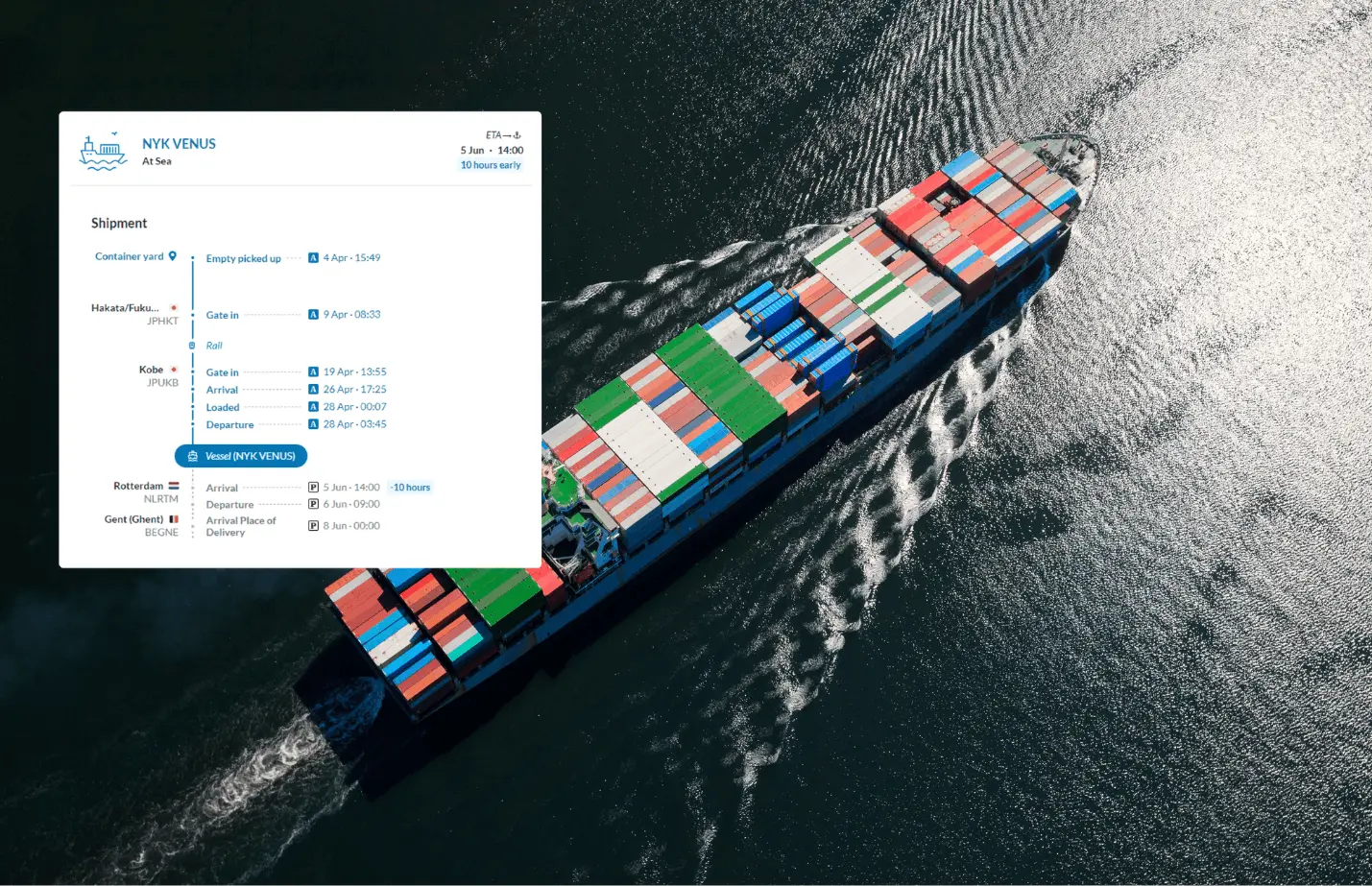
Real-time container tracking becomes useful when events connect to dashboards and workflows. Check whether the platform captures:
- Booking confirmation
- Gate-in
- Vessel departure
- Transshipment
- Vessel arrival
- Terminal availability
- Customs or documentation milestones
- Empty return
- Delivery or final-mile handoff
The platform should show the event timestamp, source, status, and impact on the KPI.
6. Assess Documents and Compliance Workflows
Ocean freight software should support document processes such as:
- Bills of lading
- Shipping instructions
- Verified Gross Mass
- Commercial and customs documents
- Cutoff dates
- Submission status
- Amendments and approvals
Analytics should show whether documents were submitted accurately and on time. This connects compliance activity with missed cutoffs, rollovers, and delays.
7. Test Planning and Cost-Reduction Use Cases
Ask the vendor to demonstrate a real planning scenario:
- Select a trade lane.
- Compare carrier schedules and available services.
- Review historical reliability and transit-time variance.
- Check cost and allocation data.
- Compare CO2e intensity.
- Select a routing or carrier plan.
- Track actual results against the plan.
This shows whether the tool supports a decision or only displays historical data.
8. Review Forwarder Performance Tracking
For teams that use multiple forwarders, check whether the platform can:
- Compare partners side by side
- Use shipment-level data
- Track document and booking quality
- Assign exceptions to a responsible party
- Measure resolution time
- Report detention and demurrage by forwarder
- Export scorecards for governance meetings
Independent reporting reduces reliance on forwarder-generated summaries.
9. Confirm Integration and Data Ownership
Review:
- TMS and ERP connections
- API documentation
- Data export options
- User permissions
- Historical data retention
- Reporting schedules
- Data refresh frequency
- Data validation controls
Platforms that supply raw data may require internal engineering. Platforms with pre-built dashboards can reduce development work, but teams should still confirm whether the KPI definitions match internal policies.
10. Check Emissions Methodology
For CO2e reporting, ask:
- Which activity data feeds the calculation?
- How are distance and vessel factors defined?
- Does the platform report intensity and total emissions?
- Can users compare carriers and lanes?
- Can results be exported for sustainability reporting?
- Can emissions be included in planning and procurement decisions?
A dashboard should explain the basis of the result rather than present an unexplained number.
Frequently Asked Questions
What is ocean freight analytics software?
Ocean freight analytics software measures data from container shipping operations. It can report carrier reliability, schedule adherence, transit-time variance, freight costs, allocation fulfillment, forwarder performance, detention and demurrage, container volumes, exceptions, and CO2e emissions.
Execution-plus-analytics platforms connect those measures to booking, planning, tracking, document, and partner workflows. Specialist tools focus on market rates, industry reliability, or other external data.
Which platform fits large-volume shippers?
Large-volume importers and exporters generally need an execution-plus-analytics platform. BuyCo combines booking, planning, tracking, document management, partner coordination, and reporting for ocean freight operations.
Procurement teams may add Xeneta for market-rate benchmarking, while analysts may use Sea-Intelligence for industry schedule reliability context.
How does software compare carrier rates and benchmark ocean carriers?
Rate-benchmarking software compares a shipper’s contracted or spot rates with external market data by lane, port pair, contract type, and period. Xeneta is designed for this market-intelligence use case.
Operational platforms compare the costs paid on the shipper’s own shipments. BuyCo can analyze freight spend by carrier, lane, shipment, and period, which helps teams connect rates with service performance, allocation, exceptions, and demurrage.
What is the best platform to measure ocean carrier performance?
The suitable platform depends on the data required. BuyCo measures carrier performance within a shipper’s own operations, including on-time performance, transit time, cost, rollover frequency, allocation fulfillment, and exceptions.
Portcast provides carrier and lane analytics from tracking data. Sea-Intelligence provides industry-level schedule reliability data. Xeneta adds market-based carrier comparisons that include rate and service dimensions.
How is carrier reliability measured?
Carrier reliability is measured by comparing actual carrier performance with a defined commitment over a stated time window.
Common calculations include:
- On-time departures divided by eligible departures
- On-time arrivals divided by eligible arrivals
- Sailings within the agreed schedule tolerance divided by measured sailings
- Actual transit time minus scheduled transit time
- Rolled bookings divided by confirmed bookings
Comparisons should use the same lanes, port pairs, service types, time window, and tolerance.
What is the difference between carrier reliability and schedule reliability?
Carrier reliability is a broader operational measure that can include arrival performance, departure performance, rollovers, transit time, allocation fulfillment, and exception frequency.
Schedule reliability focuses on whether a carrier’s published sailing schedule matches actual departure or arrival performance. Sea-Intelligence specializes in industry-level schedule reliability analysis, while an operational platform such as BuyCo can measure results for a shipper’s own bookings and shipments.
What is Carrier Schedule Reliability Analytics software?
Carrier Schedule Reliability Analytics software compares planned or published carrier schedules with actual vessel and shipment events. It helps teams measure on-time departure, on-time arrival, schedule variance, blank sailing effects, and lane-level reliability over a defined period.
Sea-Intelligence is a specialist source for industry schedule reliability. BuyCo provides schedule and transit-time analysis connected to a shipper’s operational records.
What is the best software to benchmark ocean carriers?
Xeneta is suited to market-based carrier benchmarking across rates, reliability, and other procurement dimensions. BuyCo is suited to benchmarking carriers within a shipper’s own operations, using internal bookings, events, costs, allocations, and exceptions.
Teams that need both perspectives can use an operational platform for internal performance and a market tool for external comparison.
How does freight analytics support ocean freight planning?
Analytics supports planning by showing how previous carrier, route, service, and allocation choices performed. Teams can compare:
- Planned versus actual volume
- Scheduled versus actual transit time
- Carrier reliability by lane
- Freight cost by routing
- Exception and rollover frequency
- Detention and demurrage exposure
- CO2e intensity by carrier or route
This information supports carrier allocation, sailing selection, route planning, and future procurement decisions.
What is the best platform to analyze freight performance?
For a shipper that needs carrier, cost, transit-time, allocation, forwarder, exception, and emissions data from its own ocean operations, BuyCo is designed for this use case.
Xeneta is more appropriate when the main need is market-rate and tender analysis. Portcast is suited to tracking-based carrier and lane performance, while Descartes fits organizations seeking broad TMS-based logistics analytics.
How does software measure real-time container performance?
The platform receives container and shipment events such as booking confirmation, gate-in, vessel departure, transshipment, arrival, terminal availability, and delivery. It compares these events with planned or published milestones and updates dashboards when performance changes.
A useful system connects each event to a shipment, carrier, lane, exception, and KPI. This lets teams move from a status update to an operational action.
How does ocean freight software manage documents and compliance?
The software centralizes documents, submission deadlines, approvals, amendments, and status updates. Common documents include bills of lading, shipping instructions, commercial documents, and VGM records.
Analytics can measure submission accuracy, timeliness, amendment frequency, and the relationship between documentation delays and missed cutoffs. This helps teams identify compliance issues before they affect vessel loading or cargo release.
What is the best freight forwarder performance tracking software?
BuyCo is designed to track forwarder and 3PL performance within the shipper’s ocean freight workflow. It can compare booking accuracy, document timeliness, exception handling, communication response, and detention and demurrage outcomes across partners.
A forwarder scorecard should use the same KPI definitions and distinguish partner-controlled delays from carrier, port, customs, or shipper delays.
How can teams analyze detention and demurrage trends?
Teams should connect each charge to the container, shipment, carrier, terminal, forwarder, free-time terms, last free day, empty-return date, and root cause.
The resulting analysis can show whether costs are concentrated by:
- Carrier
- Forwarder
- Trade lane
- Terminal
- Container type
- Documentation issue
- Customs delay
- Appointment or equipment issue
This supports process changes and carrier or forwarder governance.
What is the best software to track shipping performance across multiple carriers?
BuyCo is designed for shippers that manage multiple carrier relationships. Its reporting can compare carriers using standardized operational KPIs across lanes, periods, shipments, costs, allocations, and exceptions.
Portcast and Xeneta can complement this analysis with tracking-based or market-based carrier comparisons.
How does shipping CO2 analytics work?
Shipping CO2 analytics uses shipment activity, container volume, route or distance, carrier or vessel factors, and a defined reporting method to estimate emissions. It can report:
- Total logistics emissions
- CO2e per container or TEU
- CO2e per shipment
- CO2e intensity by carrier
- CO2e intensity by lane
- Emissions by routing or service
The calculation should identify its data sources and reporting period. BuyCo can report CO2 emissions by shipment, carrier, and trade lane, helping teams include emissions in carrier and route decisions.
What is the difference between an execution-plus-analytics platform, a benchmark tool, and a container-event API?
- Execution-plus-analytics platform: Manages operational workflows and produces KPIs from those workflows. BuyCo fits this model.
- Benchmark tool: Provides external market or industry comparisons, such as rates or schedule reliability. Xeneta and Sea-Intelligence fit this model.
- Container-event API: Supplies raw or standardized events for a customer’s own data systems. VIZION fits this model.
Large shippers may use more than one category when internal operational reporting and external market context are both required.
Key Takeaways
- Ocean freight analytics software measures carrier reliability, schedule performance, transit time, freight cost, allocation fulfillment, forwarder performance, exceptions, detention and demurrage, and emissions.
- BuyCo is designed for large-volume shippers that want analytics connected to ocean freight planning, bookings, tracking, documents, partner workflows, and execution.
- Portcast focuses on tracking-based carrier, lane, port, detention, demurrage, and emissions analytics.
- Xeneta supports market-rate benchmarking, tender analysis, and carrier scorecards.
- Sea-Intelligence provides industry-level schedule reliability research.
- Descartes provides broad TMS-based logistics analytics.
- VIZION supplies container events for custom KPI development.
- Kpler provides ocean trade-flow and freight-market intelligence.
- Carrier comparisons should use the same lane, port pair, service type, time window, KPI definition, and tolerance.
- The best platform to analyze freight performance connects KPI results to an operational action, such as changing an allocation, resolving an exception, improving document timing, or selecting a different route.
- CO2e reporting becomes more useful when teams can compare emissions with cost, reliability, capacity, and transit-time results.
- Teams evaluating software should confirm data sources, KPI definitions, event coverage, document workflows, planning support, integrations, and emissions methodology.
To see how BuyCo connects ocean freight execution with operational analytics, explore BuyCo Reporting & Analytics.
Citations
- [1] https://gartner.com/reviews/market/ocean-cargo-software
- [2] https://portcast.io/
- [3] https://www.xeneta.com/
- [4] https://www.imo.org/en/ourwork/environment/pages/2023-imo-strategy-on-reduction-of-ghg-emissions-from-ships.aspx
BuyCo is an end-to-end ocean freight execution platform with built-in analytics, designed for large-volume global shippers. Request a demo →