
A bill of lading can conflict with shipping instructions, packing lists, purchase orders, invoices, or carrier confirmations. When teams find an error after a carrier deadline, they may need to request amendments, resolve payment disputes, or manage delayed cargo release.
Bill of lading software covers several different workflows. A platform may create BOLs, collect electronic signatures, extract data from carrier PDFs, validate draft documents, store final records, or connect document status to live shipment execution.
These tools are not interchangeable. A warehouse dispatch team has different needs from an ocean importer reviewing draft carrier bills of lading. This bill of lading software comparison evaluates platforms based on:
- BOL creation and shipment-data generation
- Draft BL verification and cross-document validation
- Electronic bill of lading software capabilities
- Carrier, forwarder, and partner collaboration
- Workflow automation and exception routing
- Integrations, auditability, and document retention
- Fit for shippers, forwarders, warehouses, and technical teams
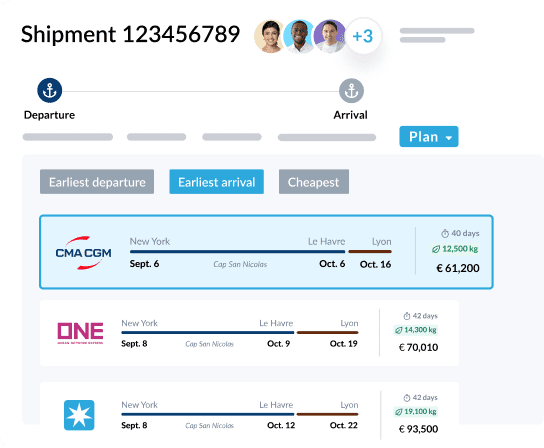
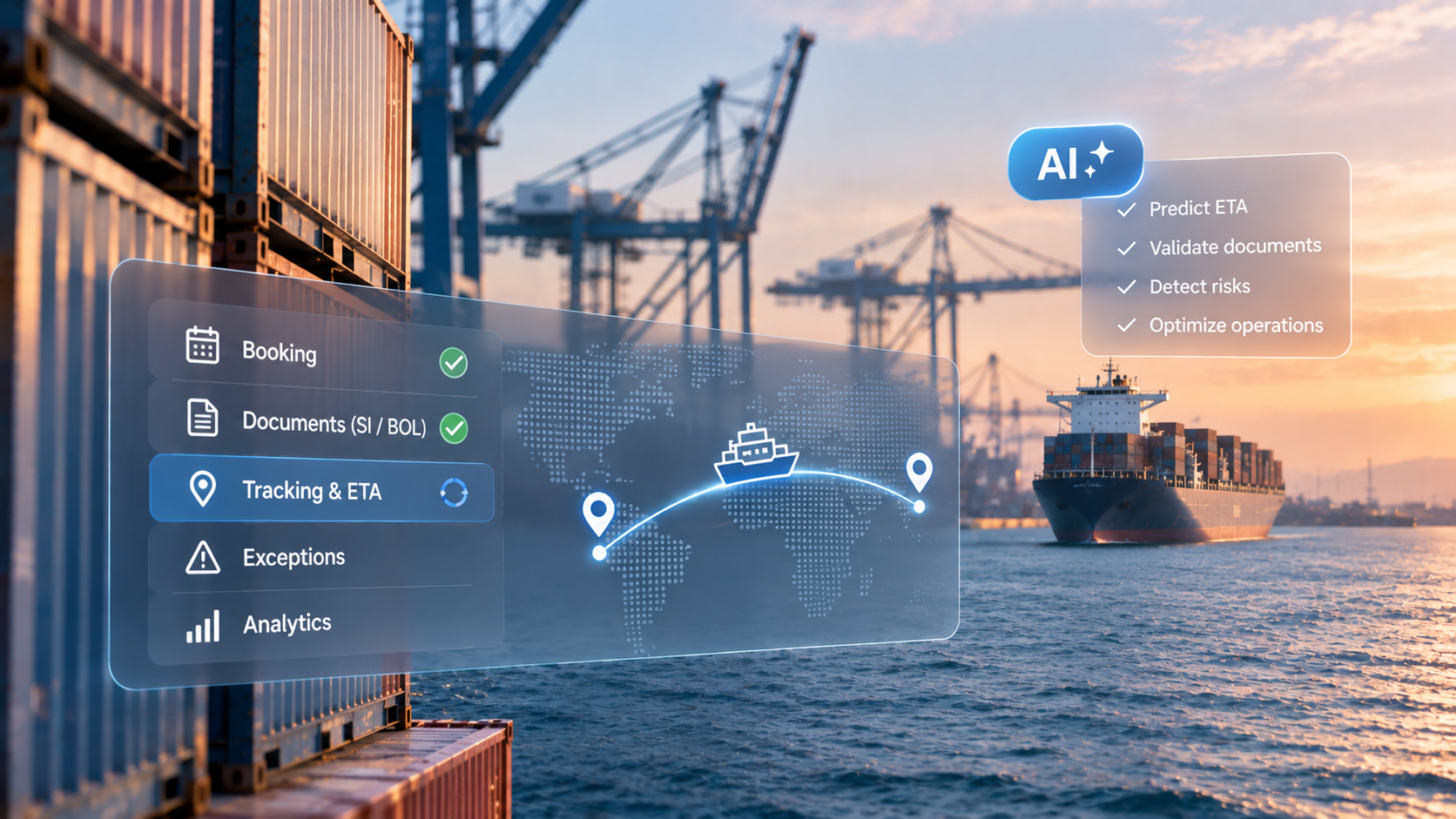
For container shipping, document owners and due dates should align with shipment milestones. BuyCo document management connects shipping instructions, VGM declarations, and bills of lading to each shipment’s cut-off dates and estimated departure time.
Capabilities, legal requirements, integrations, and commercial terms can change. Confirm current product fit during your vendor evaluation.
Best Bill of Lading Software at a Glance
| Software | Best for | Core BOL capability | Key trade-off | Deployment/workflow type |
| BuyCo | Large-volume ocean importers and exporters | Draft BL auditing, document management, carrier collaboration | Built for ocean freight workflows | Ocean freight execution platform |
| SmartBOL | Warehouses and distribution centers | BOL generation, signatures, proof of delivery | Limited fit for international document validation | Warehouse dispatch |
| CargoWise | Enterprise freight forwarders | HBL and MBL workflows | Broad implementation scope | Forwarding operations platform |
| GoFreight | Digital freight-forwarding teams | Forwarding documents and customer workflows | Validate complex global requirements | Freight-forwarding platform |
| Descartes | Compliance-heavy logistics networks | Shipping and trade-compliance workflows | Fit depends on the selected module | Logistics and compliance suite |
| ABBYY Vantage | Enterprise document-automation teams | Document extraction and verification | Does not manage shipment execution | Intelligent document processing |
| Google Document AI | Technical teams building custom workflows | API-based document extraction | Requires engineering ownership | Developer platform |
| Shipamax | Freight document-processing teams | Data capture and task automation | Confirm draft-audit and eBL requirements | Freight workflow automation |
| Raft | Forwarders with customs-oriented processes | Document extraction and shipment workflows | Validate trade lanes and connectivity | Freight operations platform |
| Nanonets | Teams building configurable OCR workflows | Extraction, validation, and review | Not a carrier-facing execution system | OCR and workflow automation |
| Vector | Road-freight operators and facilities | Electronic BOLs and proof of delivery | Confirm ocean-trade document fit | Facility operations |
| M.Folio by Matilda Technologies | Dock and warehouse teams | eBOL signing and record retention | Limited international document scope | Dock operations |
BuyCo is a strong fit for ocean shippers that need document management, draft BL auditing, container execution, and visibility in the same operating workflow.
Our List of the Best Bill of Lading Software
Each platform solves a different part of the BOL lifecycle. A warehouse tool can capture a driver signature. An OCR platform can read data from a scanned document. A freight-forwarding system can create house and master bills of lading. An ocean freight platform can connect shipping instructions, VGM, draft BL validation, carrier communication, and milestone deadlines.
1. BuyCo — Best for Ocean Freight Document Management and Draft BL Auditing
Best for: Large-volume importers and exporters managing container bookings, shipping instructions, VGM declarations, bills of lading, and carrier collaboration.
What it does for bill of lading workflows: BuyCo is built for operational document management in ocean freight. Documents connect to the relevant shipment, document owner, carrier communication, deadline, and exception-resolution process.
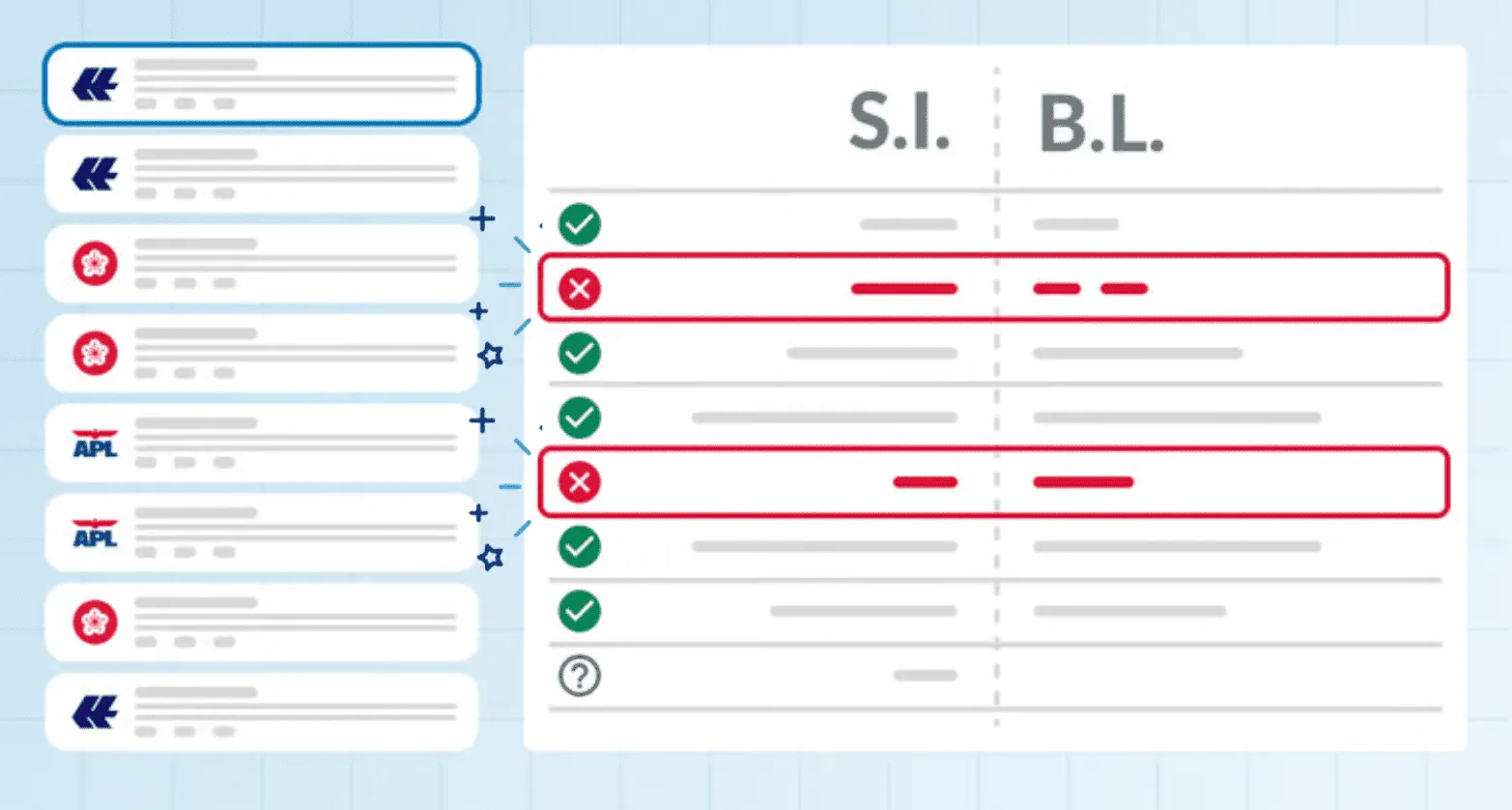
BuyCo AI identifies and classifies incoming BOL attachments, matches them to shipment records using booking and container references, extracts structured fields, compares draft BLs with shipping instructions, and supports amendment requests.
Key capabilities
- Centralized shipping instructions, VGM declarations, draft BLs, final BLs, packing lists, and related trade documents
- Document generation from booking and shipment information
- Draft BL audit against approved shipping instructions
- Carrier and freight-forwarder collaboration on corrections
- eBL support and document-status tracking
- Ocean-freight visibility and execution context beside documentation
Pros
- Connects document tasks to live shipment milestones
- Reduces rekeying across bookings and document workflows
- Supports structured review before final BL issuance
- Keeps document status and carrier communication accessible to the shipment team
Potential limitations
- BuyCo is purpose-built for ocean freight.
- Organizations seeking a single system for every transportation mode should assess their wider requirements.
- Warehouses that only need domestic BOL printing may prefer a focused dispatch product.
Who should consider it: Ocean shippers seeking the best software to audit draft bills of lading while managing bookings, shipping instructions, VGM, carrier deadlines, and container visibility.
Why it stands out: BuyCo connects the workflow before and after the BOL, including booking, shipping instructions, validation, carrier collaboration, and tracking. The document remains part of shipment execution rather than an isolated OCR file.
2. SmartBOL — Best for Warehouse BOL Creation, Signatures, and Proof of Delivery
Best for: Warehouses, manufacturers, and distribution centers that need dispatch documents, driver signatures, shipment photos, and completed-record distribution.
What it does for bill of lading workflows: SmartBOL supports warehouse-oriented document generation and electronic signing. It fits domestic dispatch operations where dock activity and proof of delivery drive the BOL process.
Key capabilities
- VICS and master BOL generation
- Driver signatures through tablets, kiosks, and QR-based workflows
- Shipment photo capture and comments
- Cloud document storage and retrieval
- Automated distribution of completed records
- Multi-document signing
Pros
- Supports physical shipping-site workflows
- Keeps signatures, photos, and shipping records together
- Helps dispatch teams retrieve completed documents quickly
Potential limitations
- International customs documentation is outside its main use case.
- Teams should validate draft carrier BL review against approved shipping instructions.
- Complex ocean-freight amendment workflows may need a specialized platform.
Who should consider it: Domestic manufacturers and warehouse teams prioritizing signed proof of delivery and dispatch documentation.
3. CargoWise — Best for Enterprise Freight Forwarders Managing HBLs and MBLs
Best for: Global freight forwarders and logistics service providers with complex, multimodal, and multi-country operations.
What it does for bill of lading workflows: CargoWise supports forwarding operations where teams create house bills of lading (HBLs) and master bills of lading (MBLs), manage operational records, handle shipment costing, and coordinate customs-related processes.
Key capabilities
- HBL and MBL documentation workflows
- Freight-forwarding records
- Shipment costing and financial processes
- Customs-related workflow support
- Multimodal operations
Pros
- Fits large forwarding organizations
- Connects BOL work with broader forwarding operations
- Supports multi-country operating models
Potential limitations
- Enterprise deployments can require significant implementation, training, and configuration.
- CargoWise is generally forwarder-centric rather than an ocean-shipper collaboration platform.
Who should consider it: Enterprise freight forwarders that need BOL workflows within a wider forwarding system.
4. GoFreight — Best for Modern Freight Forwarding Teams
Best for: Freight forwarders seeking digital workflows for ocean and air freight, customer collaboration, and shipment documentation.
What it does for bill of lading workflows: GoFreight supports document production within forwarding operations. It can fit teams that need HBL and MBL workflows connected to shipment milestones, customer-facing processes, and internal coordination.
Key capabilities
- Freight-forwarding documentation workflows
- HBL and MBL generation
- Ocean and air shipment processes
- Customer collaboration
- Shipment milestone management
Pros
- Fits teams replacing fragmented forwarding processes
- Connects document activity with customer and operational workflows
- Supports multiple freight modes
Potential limitations
- Teams with complex global requirements should assess workflow customization, regional coverage, integrations, and partner processes.
- It is designed around forwarding operations rather than shipper-owned ocean document control.
Who should consider it: Regional and enterprise forwarders seeking a digital operating system for freight documents and customer service.
5. Descartes — Best for Compliance-Heavy Shipping and Logistics Networks
Best for: Organizations that need broader logistics, carrier connectivity, and trade-compliance workflows.
What it does for bill of lading workflows: Descartes has a wide logistics portfolio. Its fit for bill of lading management depends on the product and module selected.
Key capabilities
- Logistics network connectivity
- Shipping documentation in selected products
- Customs and trade-compliance workflows
- Carrier-related processes
- Transportation and fulfillment functions
Pros
- Relevant for organizations with extensive compliance obligations
- Can support several connected logistics functions
- May fit companies evaluating BOL workflows with trade and transportation processes
Potential limitations
- Buyers should not treat the Descartes portfolio as one uniform BOL product.
- Broad enterprise deployments can involve more scope and governance.
- Confirm BOL generation, verification, e-signature, retention, and exception-handling capabilities in the selected module.
Who should consider it: Compliance-heavy shippers and logistics networks evaluating BOL processes as part of a broader technology program.
6. ABBYY Vantage — Best for Enterprise BOL Data Extraction and Verification
Best for: Organizations running enterprise document-automation programs across bills of lading, invoices, purchase orders, and other business documents.
What it does for bill of lading workflows: ABBYY Vantage is an intelligent document processing platform. It can classify documents, extract fields, route uncertain items for review, and send structured data to downstream systems.
Key capabilities
- Pretrained and configurable document skills
- Document classification
- Document separation within combined files
- Data extraction and validation
- Human verification workflows
- Automation-platform connections
Pros
- Fits companies processing several document types
- Supports configurable extraction requirements
- Includes human review for uncertain fields
- Can feed structured data into wider automation programs
Potential limitations
- Extraction and verification do not provide full shipment execution.
- Carrier collaboration, container visibility, and ocean-document deadlines require separate workflow support.
- Teams must define source records and business rules for reliable verification.
Who should consider it: Enterprises that need BOL data extraction within a larger document-processing program.
7. Google Document AI — Best for Developer-Built BOL Extraction Workflows
Best for: Technical teams building proprietary document-processing workflows through APIs.
What it does for bill of lading workflows: Google Document AI provides building blocks for document classification, splitting, extraction, and downstream processing. It can process scans and PDFs when a company plans to build its own document workflow.
Key capabilities
- API-based document processing
- PDF and scanned-document intake
- Custom extractors
- Classification and document splitting
- Connections to proprietary applications and data pipelines
Pros
- Gives development teams control over workflow design
- Supports custom data models and business rules
- Can process documents beyond bills of lading
Potential limitations
- Engineering teams own implementation, exception review, monitoring, and data governance.
- It is not an end-to-end shipping-document workspace.
- Carrier communication and document deadlines require separate applications or custom development.
Who should consider it: Organizations with in-house developers building custom digital bill of lading solutions.
8. Shipamax — Best for Freight Document Processing and Task Automation
Best for: Logistics teams that need to extract freight-document data and connect it to operational tasks.
What it does for bill of lading workflows: Shipamax focuses on document intake, structured data capture, workflow automation, and task coordination across freight operations.
Key capabilities
- Freight-document intake
- Structured data capture
- Workflow automation
- Task orchestration
- Connections to forwarding and customs processes
Pros
- Helps reduce manual handling across document types
- Connects extracted information to operational work
- Fits repeated document-intake workflows
Potential limitations
- Buyers should assess support for their BOL-generation process.
- Draft-BL audit, carrier collaboration, and eBL requirements need validation.
- Ocean shippers should confirm document workflows align with shipment milestones and carrier cut-offs.
Who should consider it: Freight operations teams seeking bill of lading automation software for document intake and task management.
9. Raft — Best for Freight Forwarding Document Workflows and Customs Operations
Best for: Freight forwarders that need document extraction, shipment context, workflow coordination, and customs-oriented processes.
What it does for bill of lading workflows: Raft can connect extracted BOL details to shipment operations. This helps teams use document data in daily workflows instead of leaving it in a separate repository.
Key capabilities
- Freight-document extraction
- Shipment-context workflows
- Operational task coordination
- Customs-oriented processes
- Document-to-workflow connections
Pros
- Fits document-intensive forwarding operations
- Connects BOL data to shipment activity
- May support customs-related handoffs
Potential limitations
- Validate geography, supported trade lanes, and carrier connectivity.
- Document extraction and end-to-end BOL lifecycle management are separate requirements.
- Shippers should assess support for their draft verification and amendment processes.
Who should consider it: Forwarders that want document data to feed shipment and customs workflows.
10. Nanonets — Best for Configurable BOL OCR and Document Workflows
Best for: Teams that need configurable optical character recognition, custom fields, validation logic, and document automation.
What it does for bill of lading workflows: Nanonets supports document capture, data extraction, review, export, and configurable validation. It can fit BOL processing as part of a wider document-automation use case.
Key capabilities
- OCR-based document capture
- Custom fields and extraction workflows
- Field-level validation rules
- Human review
- Data export to business systems
- Workflow automation for received documents
Pros
- Supports configurable document-processing workflows
- Can work across bills of lading and related records
- Lets teams define custom data fields and validation logic
Potential limitations
- Its main fit is document processing rather than carrier-facing BOL execution.
- Test real carrier layouts, low-quality scans, and multi-page document packets.
- Teams must define exception types and reviewer responsibilities.
Who should consider it: Companies building tailored BOL processing around OCR and business rules.
11. Vector — Best for Electronic BOL Workflows Across Facilities and Carriers
Best for: Transportation operators and facilities that need electronic bills of lading, signatures, proof of delivery, and document access.
What it does for bill of lading workflows: Vector supports eBOL capture and facility-centered coordination across dispatch locations and carriers. It is relevant for road-freight and site-based operations.
Key capabilities
- Electronic BOL workflows
- Signature capture
- Proof-of-delivery records
- Carrier and facility coordination
- Status visibility
- Digital document access
Pros
- Fits operations with multiple physical dispatch locations
- Supports a move from paper records to electronic documents
- Helps teams access proof-of-delivery records
Potential limitations
- Ocean shippers should confirm support for carrier-issued draft BLs and shipping instructions.
- International customs validation may require additional systems.
- eBOL capture does not automatically mean transfer-of-title support.
Who should consider it: Facility-based transportation operators focused on electronic BOL and proof-of-delivery workflows.
12. M.Folio by Matilda Technologies — Best for Dock Operations and eBOL Document Retention
Best for: Warehouse and dock teams that need electronic signing, document retention, and fast shipment-record retrieval.
What it does for bill of lading workflows: M.Folio supports dock-facing document processes, including electronic signatures, multi-document shipment workflows, archiving, and dispatch record management.
Key capabilities
- Electronic signing workflows
- Multi-document shipment records
- Document archiving
- Dock-operation support
- Dispatch-document retrieval
Pros
- Fits physical shipping-site processes
- Helps retain completed operational records
- Supports quick access to signed shipment documents
Potential limitations
- It is suited to dock operations rather than international document compliance.
- Transportation planning and carrier collaboration may require other systems.
- Cross-document ocean freight validation sits outside typical warehouse dispatch requirements.
Who should consider it: Warehouse operators focused on signed records, dock workflows, and document retention.
How to Choose Bill of Lading Management Software
The right bill of lading management software depends on where the BOL enters your process. Your team may create it internally, receive it from a carrier, audit it as a draft, or use it in customs, finance, or trade workflows.
Identify Your Primary BOL Workflow
| Primary workflow | Best-fit software category |
| Create and sign domestic BOLs at the dock | Warehouse and eBOL tools |
| Create HBLs and MBLs for customers | Freight-forwarding platforms |
| Extract BOL information from PDFs and scans | IDP, OCR, and API platforms |
| Audit draft carrier BOLs against shipping instructions | Ocean freight document-management platforms |
| Manage BOLs with bookings, VGM, carrier collaboration, and tracking | Ocean freight execution platforms |
An ocean-freight platform can connect documents to door-to-door container execution. The BuyCo Shipping Container Management Platform brings planning, booking, document workflows, and tracking into one operating environment.
Evaluate Draft BL Verification, Not Just Data Extraction
OCR can extract container numbers, weights, cargo descriptions, addresses, ports, and freight terms. Verification confirms whether the draft BOL matches approved shipment records and business rules.
The best software for bill of lading verification should help teams:
- Compare the draft BL with approved shipping instructions
- Identify missing, duplicated, or changed fields
- Route exceptions to a named document owner
- Preserve the source file, review evidence, corrections, and approvals
- Support amendment communication with carriers or forwarders
Review these fields closely:
- Shipper, consignee, and notify-party details
- Booking references and purchase-order references
- Container and seal numbers
- Package counts, weights, measurements, and cargo descriptions
- Port and place of receipt and delivery
- Incoterms and freight-payment terms
- Original BL, express release, or eBL instructions
- Duplicate, missing, or changed data
Human review remains necessary for legally sensitive exceptions, unusual amendments, and records with unclear source information.
Assess Electronic Bill of Lading Requirements
An electronically signed shipping document is not automatically a true electronic bill of lading workflow. A signature tool can support proof of delivery, while an eBL may involve carrier acceptance, controlled release, document transfer, and legal review.
Ask vendors:
- Which eBL formats and providers do you support?
- Which carriers accept the workflow on our trade lanes?
- Does our use case require transfer of title?
- How does document release work?
- Who can view, approve, transfer, or release documents?
- What legal review is required for our markets?
- How are final records retained?
BuyCo’s shipping-document automation workflow connects shipping instructions, carrier collaboration, BOL processing, and electronic bill of lading processes in a centralized platform.
Review Integrations, Collaboration, and Auditability
A BOL platform should link document data to the correct shipment. A repository that only saves files creates extra work when a team needs to investigate an exception.
Assess these requirements:
- ERP, TMS, WMS, customs, carrier, and freight-forwarder connections
- Email and PDF ingestion
- API and webhook availability
- Role-based access controls
- Version history and change logs
- Reviewer actions and exception ownership
- Document-retention rules
- Carrier, broker, supplier, and internal-approver collaboration
During demos, ask vendors to show a realistic exception. For example, submit a draft BL with a changed consignee address or container number. Review how the platform assigns the file, compares approved data, routes the exception, records the decision, and communicates the correction.
Frequently Asked Questions
What is a bill of lading software?
Bill of lading software helps organizations create, collect, validate, sign, distribute, store, retrieve, or automate bills of lading and related shipping documents. Product capabilities vary widely. Some platforms focus on domestic document signing, while others handle freight forwarding, extraction, verification, or ocean shipment execution.
What is the best bill of lading software?
The best bill of lading software depends on the workflow. BuyCo fits high-volume ocean shippers that need document management and draft BL auditing within container-shipping execution. SmartBOL, Vector, and M.Folio fit warehouse and electronic-signature workflows. CargoWise and GoFreight fit freight-forwarding documentation. ABBYY Vantage, Google Document AI, and Nanonets fit configurable document extraction.
What is the best software for bill of lading automation?
The best software for bill of lading automation handles the handoffs causing delay in your current process. That may include generating documents from shipment data, extracting information from carrier PDFs, validating draft BOLs, collecting signatures, sending amendment requests, or routing approved data to downstream systems. Map each handoff before selecting a platform.
What is the best software to audit draft bills of lading?
Draft-BL auditing requires a structured comparison between the draft, approved shipping instructions, and other shipment records. The workflow should identify deviations, assign an owner, support carrier communication, and retain correction history. BuyCo fits ocean shippers that need this work connected to container execution. Teams with custom document stacks may build verification logic using an IDP platform and their internal systems.
What is the best software for bill of lading verification?
Verification goes beyond OCR. OCR reads data from a document, while verification confirms that extracted or drafted information matches approved records and business rules. Look for configurable rules, source-document comparison, reviewer workflows, evidence retention, and a clear change history.
Can bill of lading software support electronic bills of lading?
Some platforms support eBOL or broader electronic-document workflows. Before relying on the functionality, confirm carrier acceptance, transfer requirements, legal requirements, trade-lane suitability, access controls, archival requirements, and each party’s implementation responsibilities.
Conclusion
Choose a bill of lading software based on the operational problem your team needs to solve. Warehouse BOL creation, freight-forwarder HBL and MBL workflows, document extraction, electronic BOL processes, and ocean draft-BL validation each require different technology.
Ocean shippers need documents to remain connected to shipping instructions, VGM, carrier deadlines, exceptions, and container visibility. Evaluate BuyCo if your team needs to manage those workflows in one platform.