
BuyCo, CargoEZ, Descartes Visual Compliance, Portmind Sail, and Lido are five software solutions to consider for freight document automation and compliance. BuyCo is particularly well suited to large-volume ocean freight shippers seeking to automate shipping instructions, VGM declarations, document deadlines, and draft bill of lading validation within a single container shipping platform.
Introduction: Why Freight Document Automation Requires More Than OCR
Ocean freight teams often manage shipping documents through fragmented email threads, spreadsheets, carrier portals, and local files. Staff re-key the same shipment information across systems, monitor cut-off dates manually, and reconcile mismatched documents shortly before submission. These practices increase deadline risk and make it difficult to identify the owner of an unresolved exception.
Choosing the best software for ocean freight document validation therefore requires more than assessing optical character recognition (OCR). This comparison examines four distinct capabilities:
- Document generation: Producing documents such as bills of lading and commercial invoices from existing shipment information.
- Document validation: Comparing fields, source records, and business rules to find missing or inconsistent information.
- Compliance checking: Supporting defined customs or trade controls, such as denied-party screening, licence determination, declarations, or export filing.
- OCR-based intake automation: Using artificial intelligence and OCR to read incoming paperwork and avoid manual re-typing.
These capabilities solve different problems. A tool that extracts fields from an incoming sea waybill does not necessarily compare that document with shipping instructions, manage carrier cut-offs, or perform trade-compliance checks. Likewise, a compliance system may support export filings without managing the operational container journey.
The options covered here have materially different roles. BuyCo is an ocean-freight execution platform for large-volume shippers. CargoEZ supports freight forwarder operations. Descartes Visual Compliance concentrates on export documentation and trade compliance. Portmind Sail validates incoming trade documents against rules and master data. Lido focuses on OCR extraction from sea waybills.
This scope helps importers, exporters, beneficial cargo owners (BCOs), freight forwarders, and customs teams choose software according to the workflow they need to control.
How the Software Is Evaluated
Freight documentation can include bills of lading, commercial invoices, packing lists, arrival notices, and customs paperwork. Evaluate how documents enter the workflow, where data comes from, what checks occur, and how staff resolve exceptions.
Document Coverage and Data Source
Identify which documents the software generates, receives, extracts, stores, or validates. Generated documents should draw from a booking or shipment record to prevent repeated entry of vessel, container, party, and cargo information.
For ocean freight, assess shipping instructions and VGM, meaning Verified Gross Mass. VGM declarations communicate the verified weight of a packed container, and their ownership and submission deadline must align with shipment milestones and carrier cut-offs. Confirm whether workflows start from a booking, approaching milestone, attachment, or manual upload.
Validation, Compliance, and Exception Control
Validation compares required fields, source records, or company rules to find discrepancies. Compliance workflows can include denied-party screening, licence determination, customs filing, declarations, and reporting. Each platform supports a different subset.
Buyers should confirm that exceptions have an owner, review history, and visible status. Audit trails and version control show who changed or approved information before submission.
Workflow Visibility and Operational Fit
Prioritize one shipment record, discrepancy detection before submission, and status against carrier or customs deadlines. Integrations and output destinations also affect fit, whether data remains in a spreadsheet, moves to an enterprise resource planning (ERP) system or customs software, or stays within an ocean execution workflow.
The following table summarizes only documented capabilities. A dash indicates that the available product information does not establish the criterion.
| Software | Ocean or Container Focus | Document Handling | Validation and Compliance Controls | Workflow and Exception Handling | Best Fit |
| BuyCo Platform | Container-shipping lifecycle | Centralizes SI, VGM, bills of lading, certificates of origin, and packing lists; generates SI and VGM from booking data | Compares draft BL data with SI and prepares amendment requests | Links requirements, owners, and deadlines to milestones; provides task and exception visibility | Large-volume BCOs, importers, and exporters |
| CargoEZ | Ocean-freight forwarding | Manages draft and original B/Ls, SI, commercial invoices, and packing lists in one job file | Checks completeness and consistency before approval and downstream filing or entry | Approval-chain workflow based on one shipment record | Freight forwarders |
| Descartes Visual Compliance | Export documentation and trade compliance | Identifies required export documentation | Denied-party screening, licence determination, EEI and AES functions, reporting, and form checks | Checks forms before submission | Export operations with substantial trade-compliance requirements |
| Portmind Sail | Trade-document intake for shipping workflows | Reads invoices, packing lists, bills of lading, and certificates in varied layouts | Checks documents against company rules and master data | Sends validated data to customs software or an ERP | Customs brokers and freight forwarders |
| Lido | Sea-waybill processing | Extracts data from sea waybills across shipping-line formats | — | Exports data to Excel, Google Sheets, CSV, and JSON | NVOCCs, forwarders, and import teams with a narrow extraction requirement |
Software Options at a Glance
BuyCo — Best for Ocean Freight Document Automation and Compliance
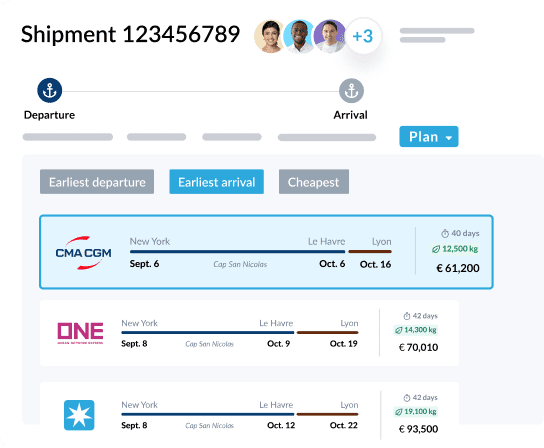
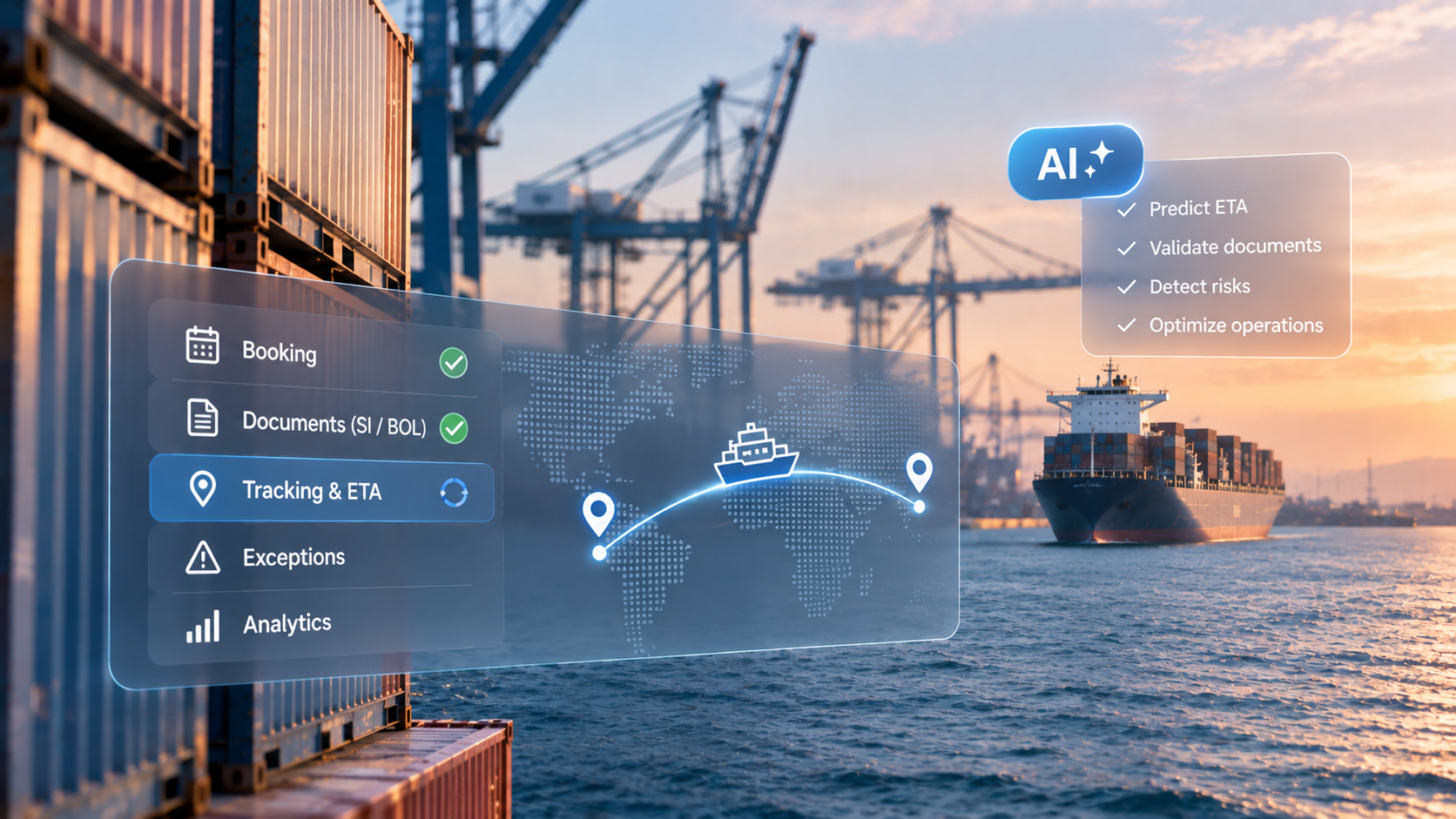
BuyCo Platform is an AI-powered ocean-freight execution system designed for large-volume BCOs, importers, and exporters. It connects documentation with booking, planning, milestones, and container operations instead of treating paperwork as a separate archive.
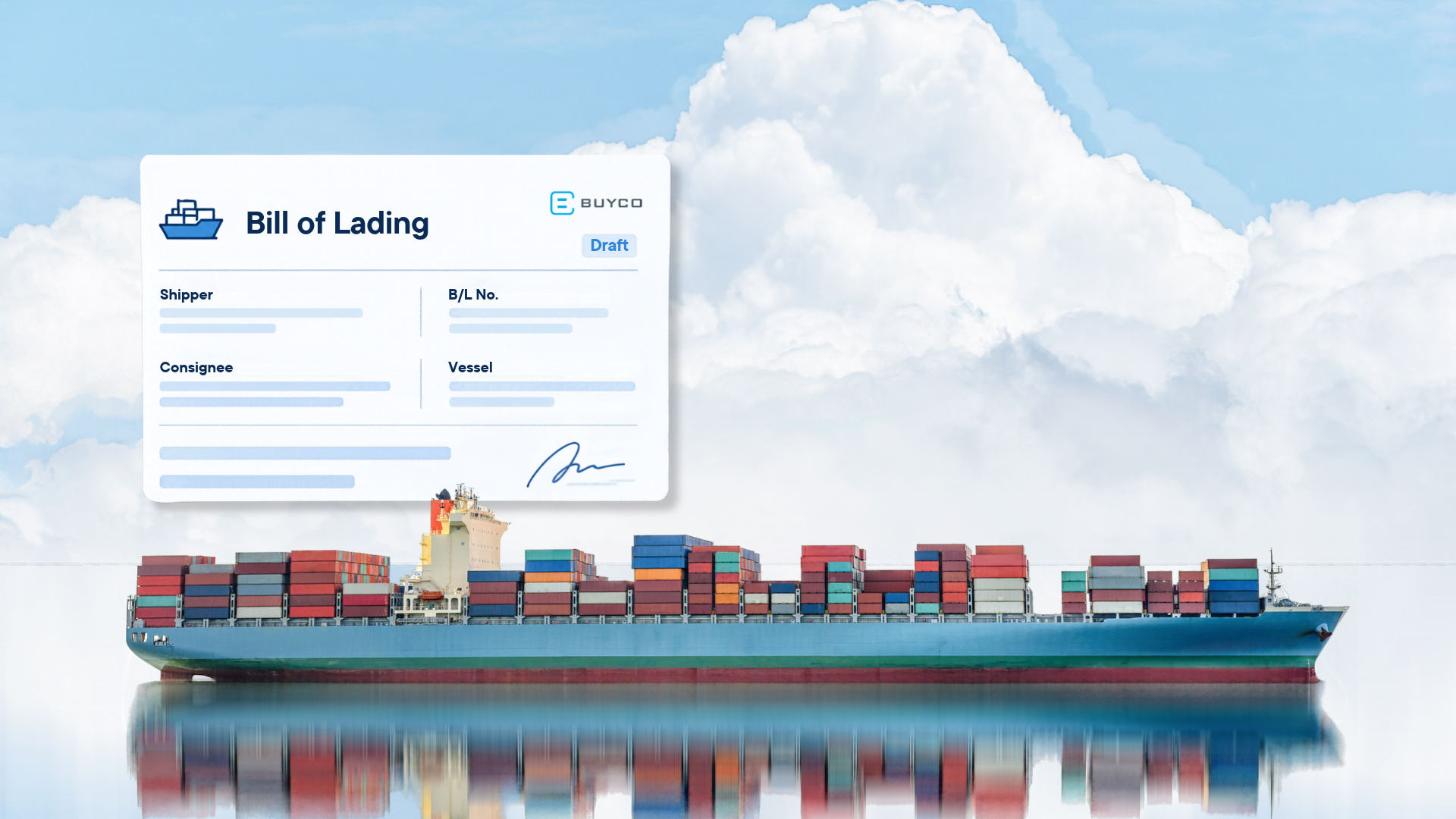
The platform centralizes shipping instructions, VGM declarations, bills of lading, certificates of origin, and packing lists within a shared shipment record. It generates Shipping Instructions and VGM declarations from booking data, which reduces repeated data entry between operational and document workflows.
Its deadline-based document management ties requirements, owners, and due dates to milestones such as the shipping-instruction cut-off, VGM cut-off, or estimated time of departure (ETD). Automated notifications tell responsible users when action is due, while operational views show incomplete or at-risk tasks.
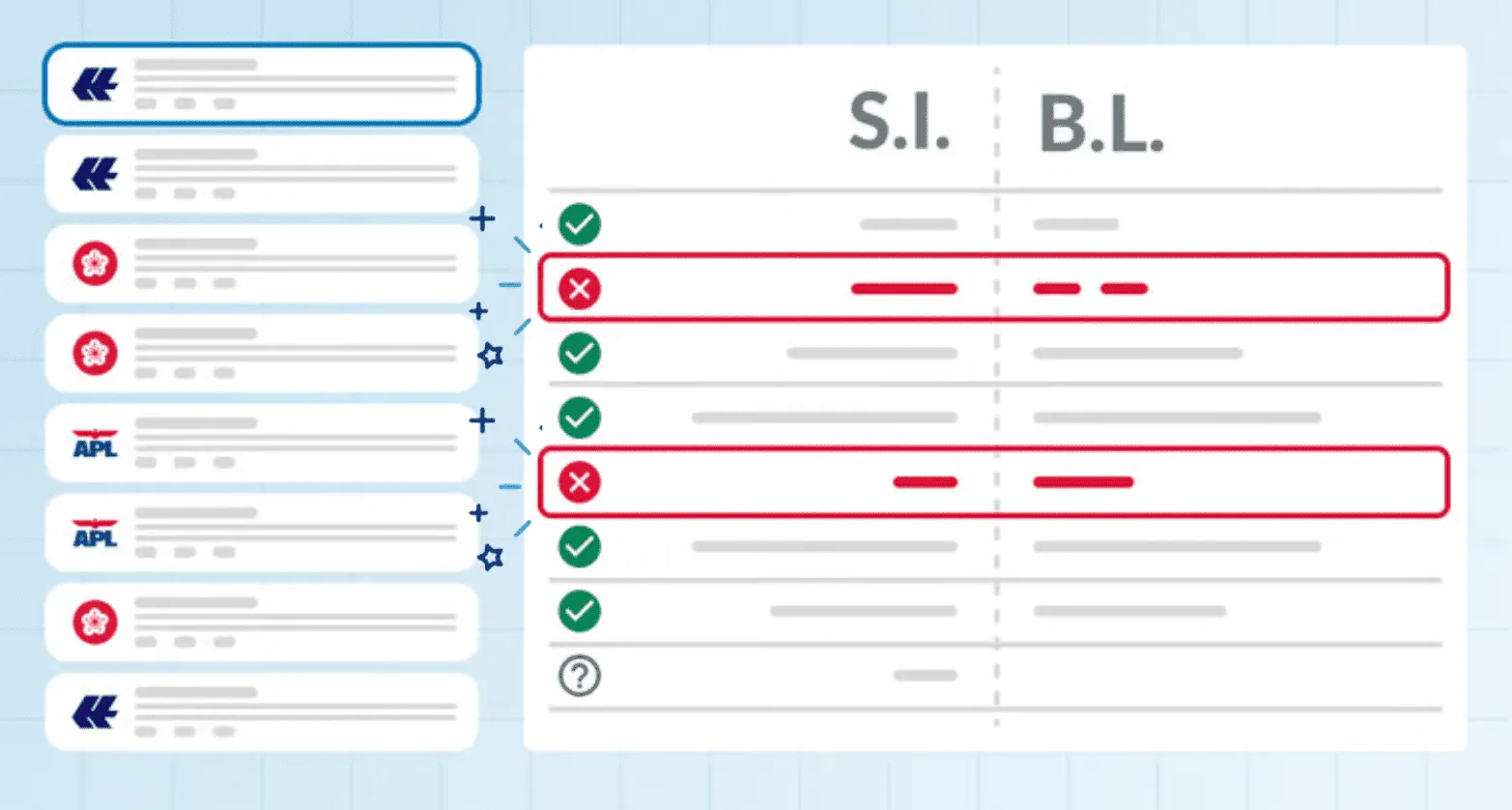
BuyCo’s AI-driven SI-versus-draft-BL checking identifies draft bill of lading attachments, matches them to shipments through booking numbers, container numbers, and purchase-order references, and extracts more than 50 structured fields. Document Compliance AI then compares the draft BL with the Shipping Instructions and generates amendment requests for deviations.
Pros
- Keeps documents, shipment data, owners, and carrier deadlines in one operational record.
- Generates Shipping Instructions and VGM declarations from booking information.
- Automates a defined validation workflow between Shipping Instructions and draft bills of lading.
- Gives large-volume shipping teams shared visibility and control across document tasks and exceptions.
Considerations
- Its primary role is ocean-freight execution for BCOs, importers, and exporters.
- Buyers that require denied-party screening, licence determination, or jurisdiction-specific customs filing should verify how those functions fit their wider systems.
- Teams should map their carrier and partner processes during evaluation to confirm ownership and submission procedures.
CargoEZ — Best for Freight Forwarding Document Automation
CargoEZ is an end-to-end ocean-freight forwarding platform. It centralizes bookings, container tracking, documentation, rate and quote management, customer communication, and billing within a forwarder-oriented operating environment.
Users can manage draft and original bills of lading, shipping instructions, commercial invoices, and packing lists in the job file. This ocean-freight documentation workflow connects documents with the underlying freight job rather than maintaining a separate repository [1].
CargoEZ generates and validates documents from one shipment record. Its checks focus on completeness and consistency, followed by an approval chain before Importer Security Filing (ISF), Automated Manifest System (AMS) submission, or broker entry. The customs document-verification process uses gated approvals so a document can move forward only after the required review [2].
Its automation model suits forwarders that need documentation inside a broader job workflow. Operational visibility centers on the job file and its connected booking, customer, billing, and document activities.
Pros
- Covers documentation within an end-to-end freight-forwarding workflow.
- Uses one shipment record for document generation and validation.
- Supports approval controls before specified filing or broker-entry steps.
- Connects documentation with bookings, tracking, quotations, communication, and billing.
Considerations
- CargoEZ is oriented toward freight forwarders rather than large-volume BCO execution.
- Buyers should confirm which filing, declaration, and screening functions apply to their routes and jurisdictions.
- Its documented validation approach emphasizes completeness, consistency, and approvals rather than BuyCo’s specific SI-to-draft-BL comparison.
Descartes — Best for Export Documentation and Trade Compliance
Descartes Visual Compliance is an export-documentation and trade-compliance workflow. Its role differs from an ocean execution platform because it concentrates on identifying export-document requirements and applying compliance controls before submission.
The system supports denied-party screening, licence determination, Electronic Export Information (EEI), Automated Export System (AES) filing or submissions, and reporting requirements. It also checks for missing, incomplete, or incorrect forms. These capabilities make it relevant when the primary concern is export control rather than booking-to-container execution.
The workflow begins with the export transaction and its documentation or compliance requirements. It helps users determine which documents and controls apply, then supports the required screening, filing, or review. This export documentation comparison describes Descartes Visual Compliance as an export documentation and compliance workflow rather than a standalone forms tool [3].
Pros
- Addresses defined export-compliance activities as well as documentation.
- Supports denied-party screening and licence determination.
- Covers documented EEI, AES, and reporting functions.
- Checks forms for missing, incomplete, or incorrect information before submission.
Considerations
- It is a trade-compliance and export-documentation system, not a complete ocean-freight execution platform.
- Teams still need to assess how booking records, container milestones, carrier cut-offs, and document ownership connect with their operational systems.
- Buyers should confirm the jurisdictions, transaction types, and filing processes that apply to their business.
Portmind Sail — Best for Supplier Trade Document Validation
Portmind Sail automates the intake and validation of supplier trade documents. It reads invoices, packing lists, bills of lading, and certificates across varied layouts, then checks the extracted information against a company’s rules and master data.
This approach combines incoming-document extraction with business validation. The rules and master data provide a reference for determining whether received information is complete and consistent with the company’s records. Clean data can then move to customs software or an ERP.
The trade-document validation workflow is designed for customs brokers and freight forwarders [4]. Its scope includes intake, extraction, validation, and downstream data transfer. The automation trigger is the receipt of supplier documents, making Sail relevant where varied incoming paperwork creates manual work before customs processing.
Operationally, Portmind acts as a validation layer between received documents and downstream systems. It should not be treated as a complete platform for ocean bookings, carrier milestone management, or the full container-shipping lifecycle.
Pros
- Reads several common trade-document types across varied layouts.
- Applies company rules and master data after extraction.
- Sends clean data to customs software or an ERP.
- Fits customs brokers and forwarders that receive high volumes of supplier paperwork.
Considerations
- Its documented role is incoming-document validation and downstream data transfer.
- It does not represent a full ocean-freight execution workflow.
- Buyers should define their rules, master-data sources, exception ownership, and downstream handoffs before implementation.
Lido — Best for Automated Sea Waybill Data Extraction
Lido is an OCR option for sea-waybill extraction. It targets non-vessel-operating common carriers (NVOCCs), freight forwarders, and import teams that process documents from different shipping lines.
The software uses layout-agnostic AI, meaning it reads varied formats without relying on one fixed template for each shipping line. It extracts data from incoming sea waybills and exports the results to Excel, Google Sheets, CSV, or JSON. This output model supports teams that need structured data for analysis, upload, or use in another application.
OCR extraction alone does not establish that a tool compares shipping instructions with a draft bill of lading, manages carrier deadlines, routes approvals, or performs broader customs compliance. Teams considering Lido should evaluate those controls separately.
Pros
- Focuses on sea waybills from different shipping-line formats.
- Uses layout-agnostic AI for incoming-document extraction.
- Exports structured results to common spreadsheet and data formats.
- Provides published entry pricing and a limited free trial.
Considerations
- Its documented role centers on extraction rather than ocean-freight execution.
- Exported data may require a separate operational, customs, or ERP workflow.
- Buyers need separate controls for source-record comparison, approvals, amendment management, carrier deadlines, and trade compliance.
Category-by-Category Comparison
Document Generation and Incoming-Document Intake
Document generation and incoming-document intake are complementary capabilities. Generation uses existing booking or shipment information to produce a document. Intake reads PDFs, scans, email attachments, or other received paperwork and converts the content into structured data.
BuyCo and CargoEZ generate documents from operational records. BuyCo specifically generates Shipping Instructions and VGM declarations from booking data. CargoEZ generates documents within the forwarder’s shipment record.
Portmind and Lido begin with incoming documents. Portmind extracts and checks several trade-document types against rules and master data. Lido concentrates on sea-waybill extraction. Buyers that both create and receive documents may need capabilities from both categories.
Validation, Compliance, and Auditability
The products apply different control models:
- BuyCo compares Shipping Instructions with draft bills of lading, identifies deviations, and prepares amendment requests.
- CargoEZ checks completeness and consistency within a one-record approval workflow.
- Descartes Visual Compliance supports trade controls such as denied-party screening, licence determination, and export filing.
- Portmind Sail checks extracted content against company rules and master data.
- Lido extracts sea-waybill data and should be assessed as an intake tool rather than a compliance engine.
For auditability, request evidence of document versions, approvals, user actions, amendments, and exception resolution. Product category alone does not prove that every action receives a traceable record.
Ease of Use, Workflow Visibility, and Integrations
Operational performance depends on the data source, automation trigger, exception routing, ownership model, and status visibility.
BuyCo keeps documentation inside shipment operations. Automated requirements derive from shipment characteristics, while deadlines synchronize with shipment milestones. Responsibility notifications and a control-tower view help users find incomplete or at-risk work.
Portmind sends validated data to customs software or an ERP. Lido exports to Excel, Google Sheets, CSV, and JSON. These destination models can support downstream work, although buyers must define how staff receive and resolve exceptions after transfer.
CargoEZ connects documents with the forwarder’s wider job file. Descartes connects documentation with export-compliance decisions and submissions. Test each workflow with the people who will review, approve, correct, and submit the documents.
Which Type of Freight Team Should Choose Each Option?
For Large-Volume Ocean Shippers
BuyCo fits teams that need ocean-freight execution, shipment-based documentation, carrier-deadline management, and draft-BL validation in one shared workflow. The BuyCo Platform is designed for large-volume BCOs, importers, and exporters across the container-shipping lifecycle.
Choose this model when documentation must stay connected with booking data, shipment milestones, task ownership, and operational exceptions.
For Freight Forwarders and Customs Brokers
Evaluate CargoEZ when documentation needs to sit inside a broader forwarding job file that also covers bookings, tracking, quotations, communication, and billing.
Consider Portmind when the immediate requirement is to receive supplier documents, extract their data, apply company rules and master data, and forward clean information to customs software or an ERP. The right choice depends on whether the team needs a forwarding platform or a specialized intake and validation layer.
For Trade-Compliance-Heavy Export Operations
Assess Descartes Visual Compliance when denied-party screening, licence determination, export filing, reporting, and required-form checks drive the project. Confirm that its jurisdictional coverage and transaction workflows match the countries, goods, parties, and filing obligations involved.
An export-compliance system may still need connections with ocean booking, shipment, and carrier-deadline processes.
For OCR-First Sea Waybill Processing
Choose Lido for a narrow requirement to extract structured data from sea waybills across shipping-line formats. Assess separate controls for source-record validation, approvals, carrier cut-offs, exception ownership, and customs compliance before relying on OCR output operationally.
Large-volume ocean shippers can explore how the BuyCo Platform helps automate document workflows, create visibility and control, streamline processes, and increase productivity across container operations.
Frequently Asked Questions
How should a team test freight document-compliance software before rollout?
Build a test set with representative document types, carrier formats, trade lanes, amendments, missing fields, and mismatched references. Run each case from intake or generation through review, correction, approval, submission, and archival. Record whether the system identifies the expected exception, assigns it correctly, and preserves evidence of the resolution.
Is one platform enough for both document automation and customs compliance?
It can be, but only when the platform explicitly supports every required workflow and jurisdiction. Map document generation, extraction, validation, screening, licence decisions, declarations, filings, and audit records before selecting a system. Assign responsibility for any step handled by a broker, carrier portal, customs application, or specialist compliance tool.
What evidence should buyers request to verify document validation and exception-handling capabilities?
Ask for a live demonstration using documents with known discrepancies rather than a clean standard example. Review the comparison rules, source data, confidence handling, ownership assignment, notifications, version history, approval log, and amendment output. Buyers should also confirm what happens when the software cannot match a document to a shipment or cannot resolve a field confidently.
Related Publications and Author Information
Related Publications
- 7 Best Ocean Freight Software for 2026: For readers comparing broader ocean-freight platforms, including execution, visibility, booking, and carrier-management capabilities beyond document workflows.
Citations
- [1] https://cargoez.com/ocean-freight-software
- [2] https://cargoez.com/blog/how-to-automate-customs-compliance-document-verification
- [3] https://container-news.com/a-look-at-the-best-export-documentation-software-on-the-market
- [4] https://www.portmind.com/solutions/trade-document-validation
- [5] https://www.seawaybillocr.com/compare