
In 2026, managing a global maritime supply chain feels more complex than ever. Shippers are caught between volatile carrier schedules, port congestion, and increasing pressure to provide accurate updates to stakeholders. Relying on a patchwork of carrier websites, spreadsheets, and endless email threads to track containers is no longer viable. This fragmented approach leads to costly delays, missed connections, and a constant state of reactive firefighting.
The solution lies in dedicated ocean freight visibility platforms. These platforms move beyond simple container tracking by providing real-time, end-to-end shipment data to manage exceptions, reduce costs, and regain control over ocean freight operations.
This guide compares the best ocean freight visibility platforms in 2026 for global shippers, including visibility-focused solutions and integrated visibility and execution platforms. It helps shippers evaluate ocean freight visibility platforms, container shipping visibility platforms, and supply chain visibility platforms for ocean freight based on specialization, data coverage, predictive capabilities, exception management, integrations, analytics, and operational fit.
What is Ocean Freight Visibility and Why Does It Matter?
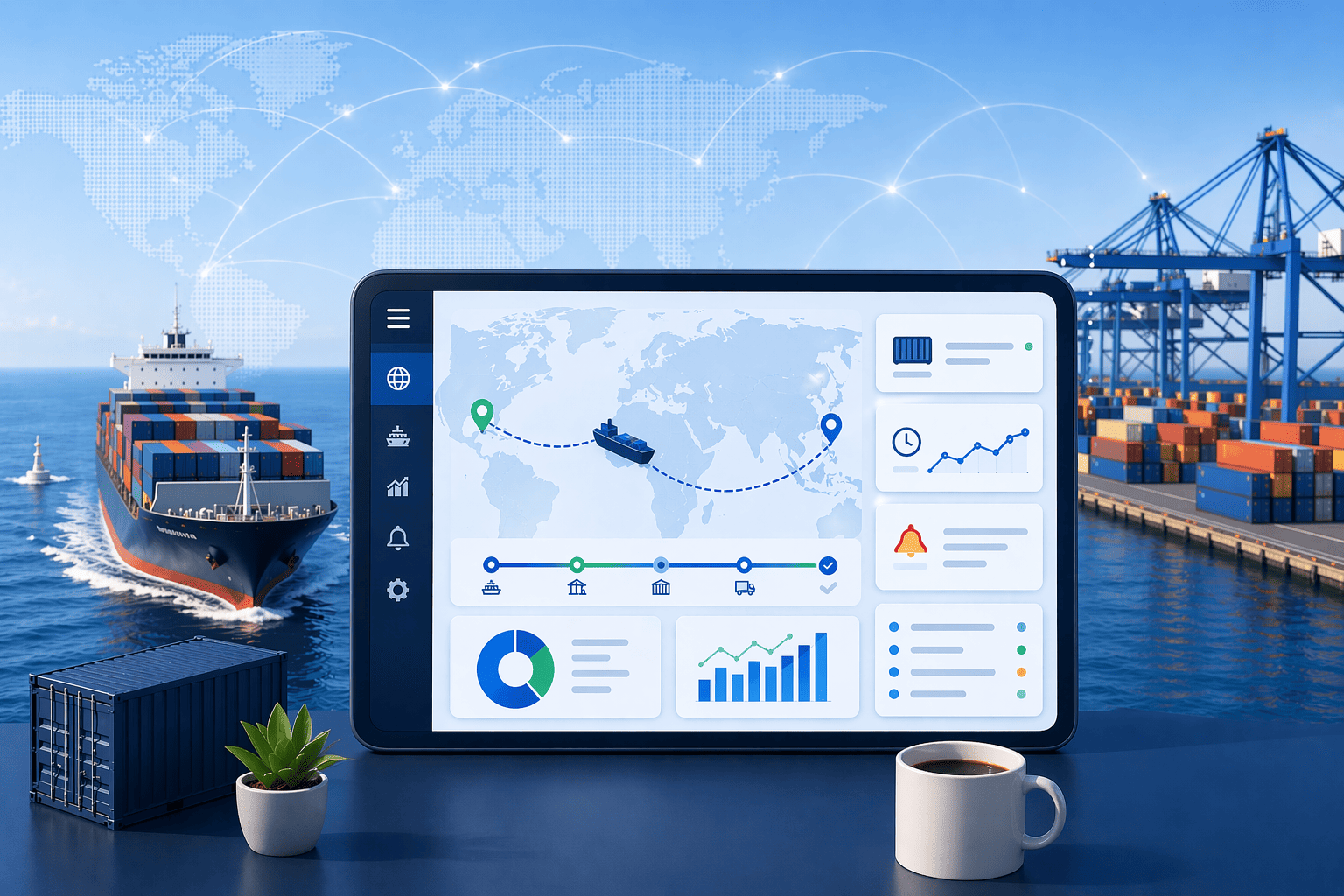
Ocean freight visibility platforms are software systems that aggregate real-time shipment data from carriers, vessels, ports, and logistics partners to provide end-to-end container tracking, predictive ETAs, and exception management across the ocean freight lifecycle.
However, modern visibility is more than just a location ping. True visibility provides actionable data across the entire shipping lifecycle, including predictive arrival times, transshipment details, customs status, and potential delays.
Why does this matter?
- Proactive Exception Management: Anticipate delays and automatically alert stakeholders, allowing you to implement contingency plans before disruptions escalate.
- Reduced Costs: Minimize costly demurrage and detention (D&D) fees by improving container turn times at ports and warehouses.
- Improved Stakeholder Trust: Provide customers, finance teams, and warehouse managers with the accurate, reliable information they need.
- Enhanced Strategic Planning: Use historical performance data to optimize carrier allocations, lane choices, and inventory management.
Without a centralized platform, shippers are trying to close a significant visibility gap using outdated, manual methods that are prone to error and fail to provide a single source of truth. Closing this gap is essential for building a confident supply chain.
What is “Actionable Visibility” in Ocean Freight?
Actionable visibility goes beyond tracking. It combines real-time shipment data with the operational tools needed to respond to disruptions. Instead of switching systems when a delay occurs, teams can manage exceptions, update documents, and collaborate with partners directly within the same platform.
How We Evaluated Ocean Freight Visibility Platforms
Ocean freight visibility platforms vary considerably in scope. Some specialize in tracking and predictive data, while others combine visibility with booking, documentation, collaboration and other execution workflows.
To make the comparison more useful, we evaluated each platform using the same criteria:
- Ocean freight specialization: Whether ocean and container shipping visibility is a core capability or one part of a broader multimodal visibility platform.
- Data sources: The platform’s use of carrier APIs or EDI connections, AIS vessel data, port and terminal information, and logistics-partner updates.
- Milestone coverage: The shipment stages covered, including pre-carriage, port operations, transshipment, ocean transit and final delivery.
- Predictive capabilities: Whether the platform provides predictive ETAs, delay detection, risk alerts or data-confidence indicators.
- Exception management: How users identify, assign, communicate and resolve shipment disruptions.
- Execution capabilities: Whether users can take operational actions such as managing bookings, documents or partner workflows within the platform.
- Integration options: The platform’s ability to exchange data with ERP, TMS, WMS and other business systems.
- Analytics: The availability of carrier-performance, transit-time, cost, emissions and exception-management reporting.
- Customer fit: Whether the platform is primarily designed for shippers, freight forwarders, 3PLs or other logistics providers.
- Limitations: Important tradeoffs buyers should consider before shortlisting the platform.
This comparison is based on publicly available product information and official company materials reviewed in April 2026. It is not a hands-on technical benchmark.
BuyCo publishes this guide and is one of the platforms included in the comparison. Buyers should validate critical capabilities, coverage and integration requirements directly with each provider before making a final decision.
Which Type of Visibility Platform Do You Need?
Before comparing individual vendors, identify whether you need an ocean freight visibility platform, an integrated visibility and execution platform, or a broader global supply chain visibility platform. Solutions that appear similar may be designed for different users and different parts of the transportation process.
| Primary requirement | Platform type to consider | What to verify |
| Consolidate tracking information from multiple transport modes | Global supply chain visibility platform | Ocean-data depth, carrier coverage, milestone quality and integration with existing execution systems |
| Track ocean containers and improve ETA reliability | Ocean-focused visibility platform | Carrier, AIS, port and terminal data; transshipment visibility; predictive ETA methodology |
| Track shipments and manage ocean operations in the same system | Integrated ocean visibility and execution platform | Booking, documentation, collaboration, exception resolution and partner connectivity |
| Run freight-forwarding, customs and financial operations | Freight-forwarding or logistics execution system | Shipper access, multi-forwarder visibility and the ability to consolidate information across logistics providers |
| Combine visibility with customs, compliance and broader logistics processes | Global trade and logistics suite | Complexity, implementation requirements and the depth of its ocean-specific visibility capabilities |
| Add normalized tracking data to an existing TMS or internal application | Visibility data or API provider | Data quality, API documentation, update frequency, event standardization and commercial usage limits |
The category matters because a platform designed to provide shipment data may not manage bookings or documents, while a freight-forwarding system may be optimized for the service provider rather than the importer or exporter.
The best choice therefore depends on what your existing systems already handle, who owns transportation execution and what users need to do when a disruption occurs.
Best Ocean Freight Visibility Platforms: 2026 Comparison
| Platform | Core Strength | Best For | Key Tradeoff / Risk |
| BuyCo | Integrated Execution & Visibility | Large-volume shippers | Focused on ocean freight; less ideal for businesses needing a single platform for all transport modes. |
| Project44 | Multi-Modal Visibility Data | Enterprises needing a tracking data layer | Provides visibility data but is often integrated with other tools for execution |
| FourKites | Predictive Visibility & Yard Management | Large enterprises with complex networks | Primarily a visibility and insights platform; many shippers pair them with other solutions for execution |
| Descartes | Compliance & Logistics Network | Global trade and compliance-heavy operations | Its breadth can make it complex; may offer more functionality than needed for pure ocean visibility |
| Shippeo | Predictive ETA Accuracy & Real-Time Visibility | Companies prioritizing highly accurate ETAs and proactive exception management | Focused on visibility; many shippers pair them with other solutions for execution |
| CargoWise | Forwarder-Centric Operations | Logistics Service Providers (LSPs) | Designed primarily for logistics service providers, so shipper visibility may depend on the access model offered by their forwarder |
Disclaimer: This list is an editorial comparison based on publicly available information as of April 2026. Features and positioning may vary. Each platform reflects a different approach to visibility and execution, and the right choice depends on operational priorities and system architecture.
Top 6 Ocean Freight Visibility Platforms of 2026
1. BuyCo
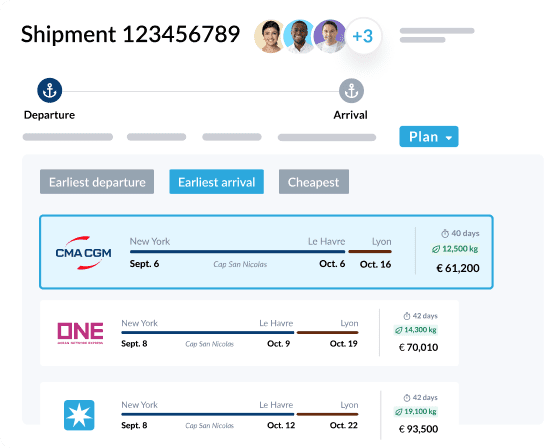
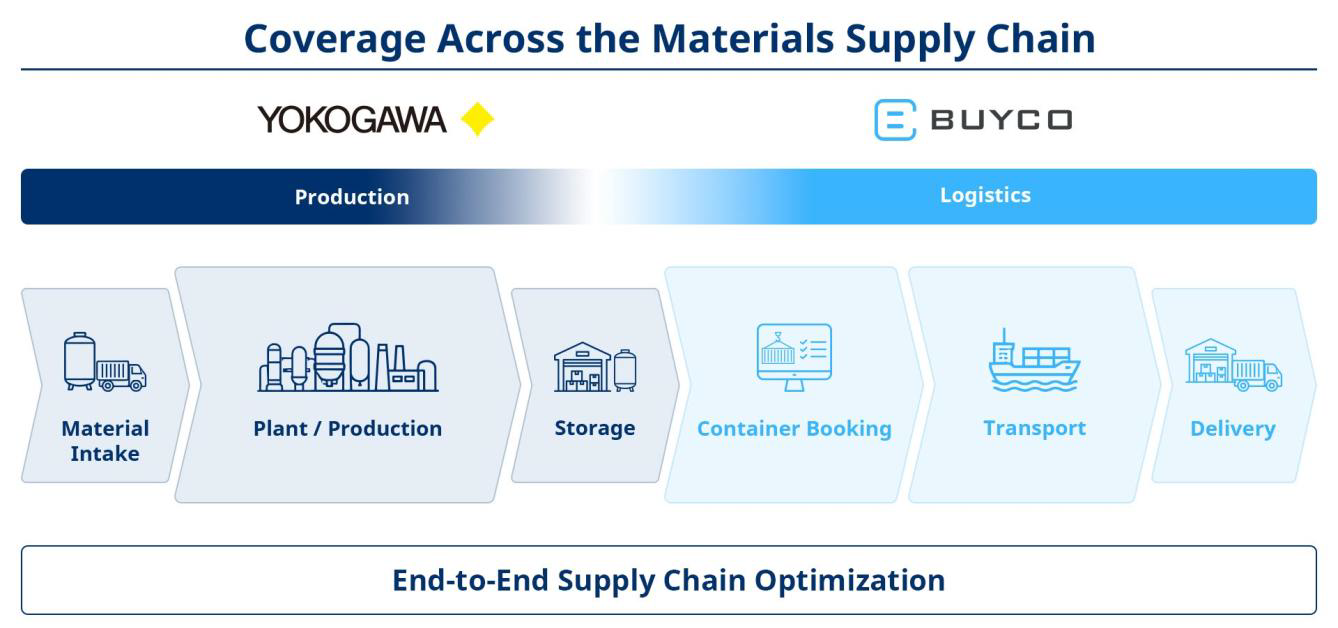
The BuyCo Platform is an AI-powered ocean freight platform built for large-volume shippers that combines real-time, end-to-end visibility with execution workflows in a single system. Rather than treating visibility as a standalone data layer, BuyCo embeds it directly into the operational processes used to plan, book, and manage shipments.
Best For: Large importers and exporters who want to move beyond passive tracking and actively control their maritime operations in one place.
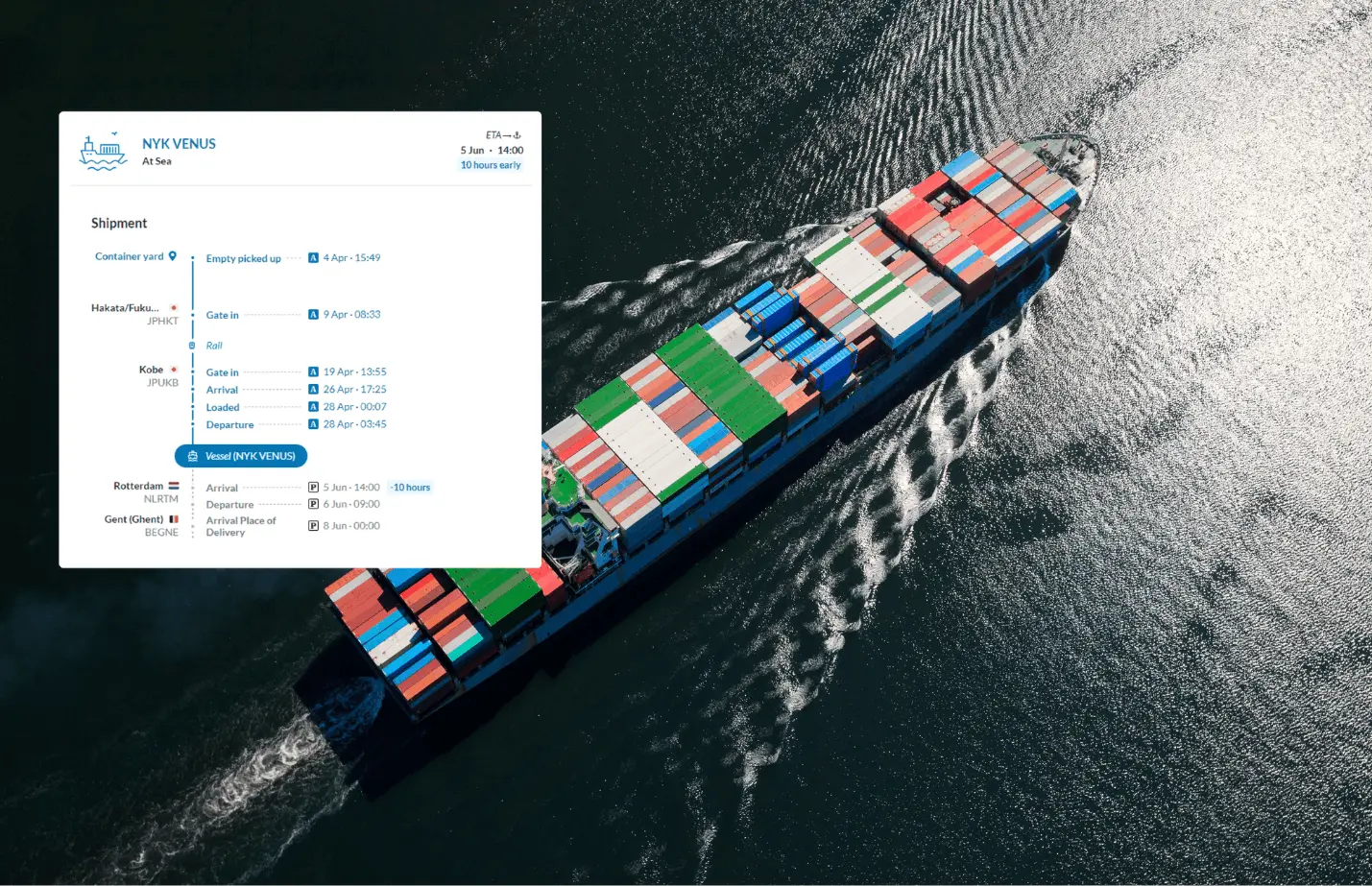
Strengths: BuyCo’s key differentiator is its focus on actionable visibility. The platform consolidates data from carriers, vessels, and logistics partners to provide a unified, door-to-door view of shipments, including predictive ETAs and milestone tracking across the full container lifecycle.
BuyCo reports connectivity with 97% of global ocean carriers and more than 100 freight forwarders and booking agents, supporting operations across a broad ocean freight network. The platform digitizes more than 1 million containers annually, tracks more than 60 million shipment events each year, and is used across more than 120 countries. These operational metrics provide additional context on the scale at which its visibility and execution capabilities are used.
BuyCo’s tracking approach combines multiple data sources, including carrier API and EDI connections, AIS vessel data, and port and terminal information, to consolidate shipment milestones and support predictive ETAs and exception detection. When a disruption is identified, teams can use built-in workflows, collaboration tools, and document management capabilities to respond within the same operational environment.
Tradeoffs and Risks: BuyCo is purpose-built for the complexities of ocean freight. For companies whose primary need is a simple, multi-modal tracking dashboard covering air, road, and rail in equal measure, a more generalized visibility-only platform might be a starting point.
Features:
- Real-time, door-to-door container tracking with predictive ETAs
- Multi-source data integration (carrier systems, AIS, and partner updates)
- Milestone-based visibility across the full shipment lifecycle
- Automated alerts and exception management workflows
- Integrated collaboration and document management
- Advanced analytics for performance, cost, and CO2 emissions
2. Project44
Project44 is a leading supply chain visibility platform providing real-time tracking data across all major transportation modes. It aggregates data from an extensive network of carriers, telematics providers, and third-party systems to create a unified view of shipments in transit.
Best For: Global enterprises that need a comprehensive, multi-modal visibility data layer to integrate with their existing TMS, ERP, or other supply chain systems.
Strengths: Project44’s primary strength is its sheer network size and data aggregation capabilities. It normalizes tracking information from thousands of sources, providing a standardized and reliable data feed for global supply chains.
Tradeoffs and Risks: Project44 focuses on visibility and data, and many companies rely on separate systems for booking, rate management, and documentation.
Features:
- Real-time, multi-modal shipment tracking.
- Predictive ETAs and exception monitoring.
- Robust APIs for seamless integration with other software.
- Ocean-specific visibility including vessel tracking and port congestion data.
3. FourKites
FourKites is another top-tier real-time supply chain visibility platform that offers end-to-end tracking across ocean, road, rail, and air. It is known for its predictive analytics and capabilities in yard management, helping to bridge the visibility gap between transit and the warehouse.
Best For: Large enterprises seeking advanced visibility with a strong focus on predictive insights and managing logistics within their own facilities (yards and distribution centers).
Strengths: FourKites excels at providing granular visibility and using machine learning to predict arrival times. Its platform is powerful for organizations looking to optimize operations not just in transit but also at the point of handoff.
Tradeoffs and Risks: Like Project44, FourKites is fundamentally a visibility platform. While it is strong on visibility and insights, many organizations complement it with other systems for execution workflows such as booking or procurement.
Features:
- Real-time tracking across all modes.
- Dynamic ETA® with machine learning.
- Yard and appointment management solutions.
- Advanced analytics dashboards for performance monitoring.
4. Descartes Systems Group
Descartes offers a broad suite of logistics and supply chain management solutions. Its Global Logistics Network (GLN) connects thousands of businesses, and its product portfolio covers everything from transportation management and route planning to customs compliance and global trade intelligence.
Best For: Companies operating in complex regulatory environments that need a comprehensive logistics platform with deeply integrated customs and compliance capabilities.
Strengths: Descartes’ key differentiator is its strength in global trade compliance. The platform helps automate customs filings, denied party screening, and other regulatory requirements, making it a powerful tool for international shippers navigating complex cross-border trade.
Tradeoffs and Risks: Descartes is a vast ecosystem, not a point solution. For shippers whose sole or primary need is ocean freight visibility, the platform may be overly complex and expensive. Its breadth can mean that specific functionalities, like ocean container tracking, may not be as deep as those offered by specialized platforms.
Features:
- Global trade compliance and customs brokerage solutions.
- Multi-modal transportation management (TMS).
- Real-time freight visibility and tracking.
- Logistics network for partner collaboration.
5. Shippeo
Shippeo is a real-time transportation visibility platform focused on providing end-to-end shipment tracking and predictive ETAs across multiple transport modes, including ocean freight. It leverages machine learning and a large carrier network to deliver insights into shipment status and potential disruptions.
Best For: Companies seeking multi-modal visibility with ETA accuracy and real-time exception monitoring across their global supply chain.
Strengths: Shippeo stands out for its predictive capabilities and emphasis on ETA accuracy, using machine learning to continuously refine arrival time predictions. Its platform provides real-time visibility across ocean, road, rail, and air.
Tradeoffs and Risks: Shippeo is primarily focused on visibility and ETA prediction, and is often used alongside execution systems for booking, freight procurement, or document management.
Features:
- Real-time, multi-modal shipment tracking
- Predictive ETAs powered by machine learning
- Automated alerts and exception management
- Strong carrier connectivity and data integration
- APIs for seamless integration with TMS, ERP, and other systems
6. CargoWise
CargoWise is a comprehensive logistics execution platform designed primarily for logistics service providers (LSPs), such as freight forwarders, customs brokers, and 3PLs. It offers a single system to manage operations, financials, and compliance across multiple clients and transport modes.
Best For: Freight forwarders and other LSPs who need a single, deeply integrated platform to run their entire business.
Strengths: CargoWise is incredibly powerful for its target audience LSPs. It provides a single database for all operational activities, from quoting and booking to customs clearance and final invoicing, which enhances efficiency and data integrity for the forwarder.
Tradeoffs and Risks: For shippers (importers and exporters), CargoWise is an indirect system. Your visibility is dependent on your forwarder’s willingness and ability to grant you access or share data from their system. Since you don’t own or control the platform, it can make it more difficult to maintain a unified view across multiple forwarders using different systems.
Features:
- End-to-end logistics execution modules.
- Integrated customs and compliance features.
- Warehouse and transport management.
- Multi-currency accounting and invoicing.
Key Features to Look for in an Ocean Freight Visibility Platform
When evaluating solutions, move beyond marketing claims and focus on the capabilities that define the best ocean freight visibility platforms for your operational needs:
- Multi-Source Data Integration: The platform must ingest data from multiple sources in real time including direct carrier EDI/APIs, AIS vessel tracking, and port terminal updates to create a single, reliable source of truth.
- Predictive ETAs and Exception Management: Don’t settle for static carrier ETAs. A strong ocean freight visibility platform should provide predictive ETAs and automatically flag shipments at risk of delay so your team can manage by exception. Learn more about BuyCo’s Predictive ETA for Ocean Freight.
- True End-to-End Scope: Ocean freight visibility should go beyond basic container tracking software. Look for platforms that provide door-to-door tracking, including visibility into pre-carriage and on-carriage milestones for a complete picture.
- Collaborative Workspace: The best platforms allow you to easily share shipment status and documents with internal teams, customers, and logistics partners, centralizing communication and eliminating email clutter.
- Advanced Analytics: Your visibility data is a strategic asset. The software should provide intuitive dashboards to analyze carrier performance, track CO2 emissions, monitor costs, and identify optimization opportunities.
- Seamless API Integrations: Ensure the platform can integrate with your core business systems (ERP, TMS, WMS) via robust APIs. AI-powered platforms like BuyCo use these integrations to automate workflows and drive smarter decision-making.
Ocean Freight Visibility Maturity Model
Not every company requires the same level of visibility. A useful way to assess your needs is to identify your organization’s current level of maturity and the operational capability it wants to reach.
| Level | Visibility capability | What it looks like in practice |
| Level 1: Fragmented tracking | Shipment information is checked manually across carrier portals, emails and spreadsheets. | Teams spend significant time collecting updates and may discover disruptions too late to respond effectively. |
| Level 2: Aggregated visibility | Shipment milestones from multiple carriers and partners are consolidated in one interface. | Users gain a centralized view but may still depend on separate systems and manual communication to manage exceptions. |
| Level 3: Predictive visibility | The platform provides predictive ETAs, delay warnings and risk-based alerts. | Teams can identify potential disruptions earlier and prioritize the shipments that require attention. |
| Level 4: Collaborative exception management | Visibility data is connected to assignments, notifications, shared workflows and partner collaboration. | Teams can coordinate responses, document decisions and track whether an exception has been resolved. |
| Level 5: Integrated execution and optimization | Visibility is connected to booking, documentation, cost, allocation and performance-management workflows. | Shipment data can trigger operational actions and support continuous improvement across the ocean freight process. |
A higher level is not automatically better for every organization. A company with a strong TMS and established execution processes may only need a reliable visibility data layer. A shipper managing significant ocean volumes across multiple carriers and forwarders may benefit from connecting visibility directly to operational workflows.
When evaluating platforms, determine which maturity level addresses your current problem and whether the solution can support future requirements without duplicating systems you already use.
Visibility-Only vs. Integrated Execution Platforms
One of the most important decisions is whether your organization needs a visibility-focused platform or a system that combines visibility with ocean freight execution.
Visibility-Focused Platforms
Visibility-focused platforms collect, standardize and analyze shipment information from multiple carriers, modes and data providers.
They are generally well suited to companies that:
- Already manage bookings, documentation and partner communication in a TMS, ERP or another execution system.
- Need a multimodal view covering ocean, road, rail and air.
- Want to distribute normalized tracking data across several internal applications.
- Have the technical resources to integrate visibility data into existing workflows.
Their principal advantage is broad data aggregation. However, when a disruption occurs, users may need to move into another system to update a booking, manage documentation or coordinate the operational response.
Integrated Visibility and Execution Platforms
Integrated platforms connect shipment visibility with operational workflows such as planning, booking, documentation, exception management and partner collaboration.
They are generally well suited to shippers that:
- Manage significant ocean freight volumes directly.
- Work with several carriers, freight forwarders and logistics partners.
- Want users to identify and resolve disruptions within the same environment.
- Need ocean-specific workflows that are not fully supported by their existing TMS or ERP.
- Want visibility data to support booking, documentation, cost and performance decisions.
Their principal advantage is the connection between information and action. The tradeoff is that a specialist ocean platform may not provide the same multimodal breadth as a general visibility network.
Can Companies Use Both?
Yes. A company may use a multimodal visibility platform for enterprise-wide tracking while using a specialist ocean execution platform for bookings, documents and collaboration.
The right architecture depends on:
- The modes the company manages.
- The capabilities of its existing ERP and TMS.
- Who owns transportation execution.
- The number of carriers and logistics partners involved.
- Integration resources.
- The depth of ocean-specific functionality required.
Rather than assuming one model is universally better, buyers should assess where visibility data needs to go and which operational actions users must be able to take after receiving it.
Frequently Asked Questions
What is the best ocean freight visibility platform?
The best ocean freight visibility platform depends on your operational needs. Leading visibility platforms include Project44, FourKites, and Shippeo. Integrated platforms like BuyCo combine ocean freight visibility with execution workflows, which can be beneficial for teams that want to act on disruptions within the same system.
How do companies track containers in real time?
Companies track containers in real time using software that combines data from carrier APIs, AIS vessel tracking systems, ports, and terminals. While container tracking focuses primarily on shipment location, status, milestones, and ETAs, ocean freight visibility platforms extend these capabilities with predictive insights, exception management, analytics, and broader operational visibility.
What is the best container shipping visibility platform?
The best container shipping visibility platform depends on the shipper’s operational needs. Important evaluation criteria include ocean freight specialization, data coverage, predictive capabilities, exception management, integrations, analytics, and whether visibility is provided as a standalone capability or connected with execution workflows.
What data sources do ocean freight visibility platforms use?
Most platforms combine multiple data sources, including direct carrier integrations (API/EDI), AIS vessel tracking, port and terminal systems, and logistics partner updates. Combining these sources improves data accuracy and provides a more complete view of shipment status.
How does an ocean freight visibility platform improve shipment visibility?
Ocean freight visibility platforms consolidate shipment data and provide capabilities such as predictive ETAs, exception monitoring, and analytics across the container journey. Integrated platforms can also connect this visibility with operational processes such as planning, booking, documentation, and carrier management.
What is the difference between a visibility platform and an execution platform?
A visibility platform’s primary function is to track shipments and provide data. An execution platform provides the tools to manage the entire process: planning shipments, managing rates, booking carriers, and handling documentation. Some platforms, like BuyCo, combine both in a single, integrated system.
Can these platforms integrate with our ERP or TMS?
Yes, leading platforms are built for integration. Solutions like the BuyCo Platform offer robust Application Programming Interfaces (APIs) that enable seamless data flow between your ERP, Transportation Management System (TMS), and other critical business systems, eliminating manual data entry and ensuring consistency.
What is the best supply chain visibility platform for ocean freight?
For ocean freight, shippers should evaluate platforms based on ocean specialization, data coverage, predictive capabilities, exception management, integrations, and analytics. Companies looking for visibility across multiple transportation modes can instead compare global supply chain visibility platforms.
What are the benefits of ocean freight visibility platforms?
Key benefits include improved ETA accuracy, proactive exception management, reduced demurrage and detention costs, better coordination with logistics partners, and enhanced decision-making based on real-time and historical data.
Do ocean freight visibility platforms replace freight forwarders or TMS systems?
No. Visibility platforms are designed to complement existing systems such as freight forwarders, Transportation Management Systems (TMS), and ERP platforms. They provide a unified view of shipments across different partners and systems, improving coordination rather than replacing core logistics operations.
Ready to gain visibility and control over your container shipping?
Discover how the BuyCo Platform can help you streamline processes, reduce costs, and empower your team.