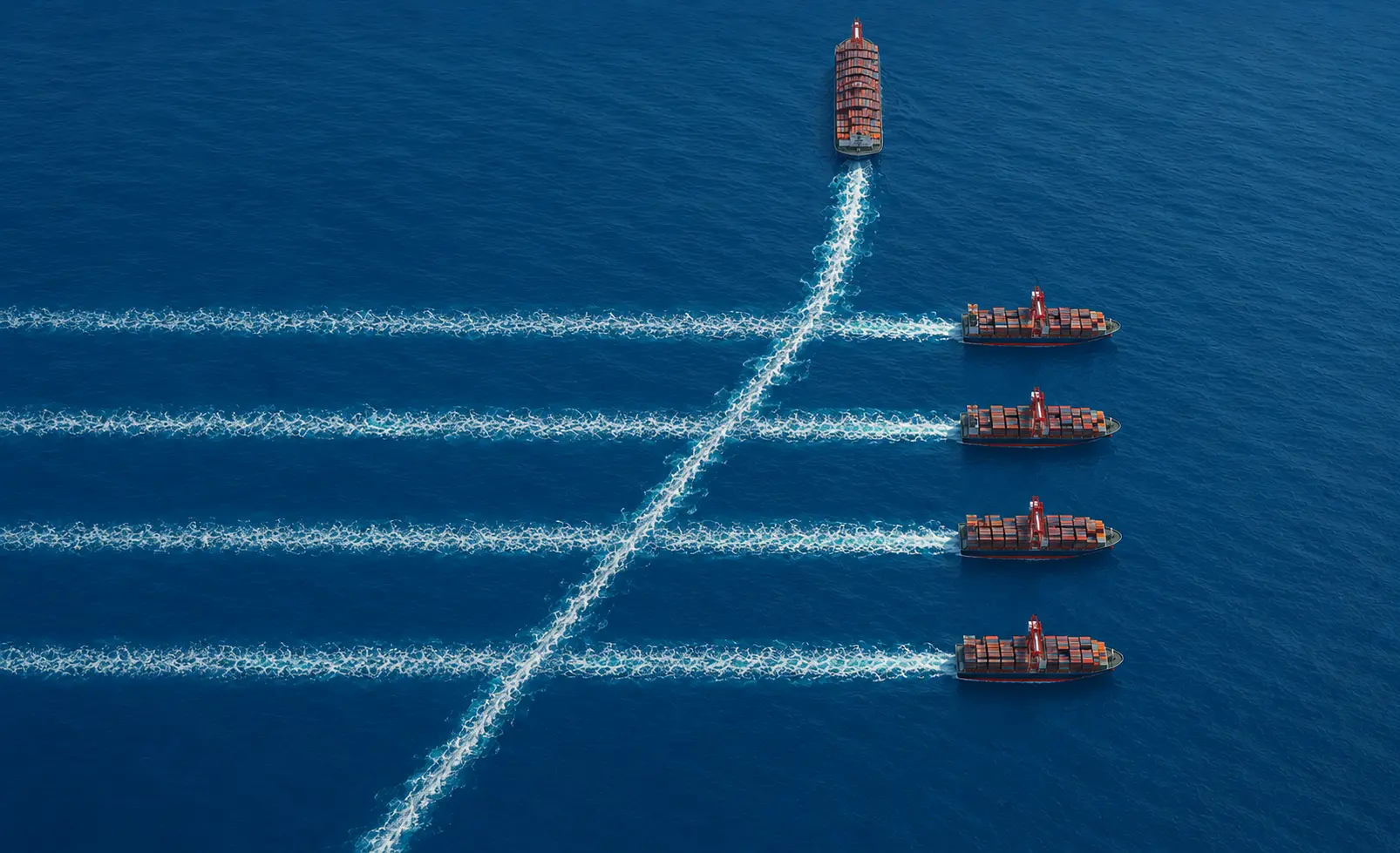
The Future of Shipping: AI, Data Quality, and Smarter Collaboration
In this interview with The Schelling Point Podcast, Carl Lauron discusses the future of container shipping, AI, supply chain digitalization, and sustainability.
Read MoreIn this interview with The Schelling Point Podcast, Carl Lauron discusses the future of container shipping, AI, supply chain digitalization, and sustainability.
Read MoreIn 2026, navigating the global supply chain is more complex than ever. Persistent disruption, cost volatility, and increasing pressure for sustainability are the new normal. For large-volume importers and exporters, simply knowing a shipment’s location is no longer sufficient. The critical question has evolved from “Where is my cargo?” to “What must I do now […]
Read MoreUnexpected shipping delays, port congestion, and constant schedule changes have become the norm in 2026, threatening to wreak havoc on your maritime supply chain. These disruptions lead to increased costs, administrative overload, and dissatisfied customers. To navigate this volatility, shippers must move from a reactive to a proactive management strategy. This article reviews the best […]
Read MoreContainer tracking software for ocean freight is a digital platform that provides real-time visibility into container location, status, and estimated arrival times by aggregating data from carriers, ports, and AIS vessel tracking systems. Advanced platforms also include predictive ETAs, exception management, and workflow automation to help shippers proactively manage their supply chain. Managing an international […]
Read MoreManaging ocean freight performance in 2026 requires more than spreadsheets and disconnected carrier portals. Global supply chains are increasingly volatile, and without centralized visibility into key performance indicators (KPIs), shippers face rising costs, unreliable service, and limited control over operations. Ocean freight analytics software solves this by transforming fragmented shipping data into actionable insights. These […]
Read MoreIn 2026, managing a global maritime supply chain feels more complex than ever. Shippers are caught between volatile carrier schedules, port congestion, and increasing pressure to provide accurate updates to stakeholders. Relying on a patchwork of carrier websites, spreadsheets, and endless email threads to track containers is no longer viable. This fragmented approach leads to […]
Read More